Fleet buying is not retail buying scaled up. Survey the fleet, standardise on the smallest seat, and check clearance for controls and airbag paths before anything else.
Fleet lumbar support buying is not retail buying scaled up. You are equipping many vehicles that several drivers share, so fit, durability and replacement matter more than the contour of any one seat. Standardise on the seat you have least of: a support that fits the narrowest seat in the fleet can be issued to every driver, while one that fits the widest cannot.
The failure mode is predictable. A fleet specifies a product from the most comfortable vehicle in the pool, issues it across a mixed fleet, and then finds it will not sit correctly in the vans.
Key Takeaways
Survey the fleet by vehicle class and seat type before specifying anything, and treat the narrowest seat as the constraint.
One or two SKUs beat a size range, because purchasing, storage, issuing and replacement all get simpler.
Where vehicles are shared, adjustability and easy repositioning outweigh a personalised contour.
Durability shifts toward the parts that fail: straps, hardware and covers, which should be replaceable.
Clearance for seat controls and side airbag paths is a safety check, not a comfort preference.
Why Fleet Buying Is Not Retail Buying
A retail buyer optimises for one back in one seat. A fleet optimises for a distribution: several vehicle classes, several body sizes, several drivers per vehicle, and a replacement cycle that runs for years.
That changes what counts as a good product. Contour is worth less when the next driver is a different size, a fixed shape is worth less when the seat is adjusted by whoever used it last, and a cover that cannot be removed is a problem when the same vehicle is used across shifts.
It also changes the arithmetic. A slightly more expensive unit that survives the replacement cycle and does not generate driver complaints is usually cheaper overall than a low-cost unit that has to be replaced mid-cycle and generates admin every time.
Survey the Fleet Before You Specify Anything
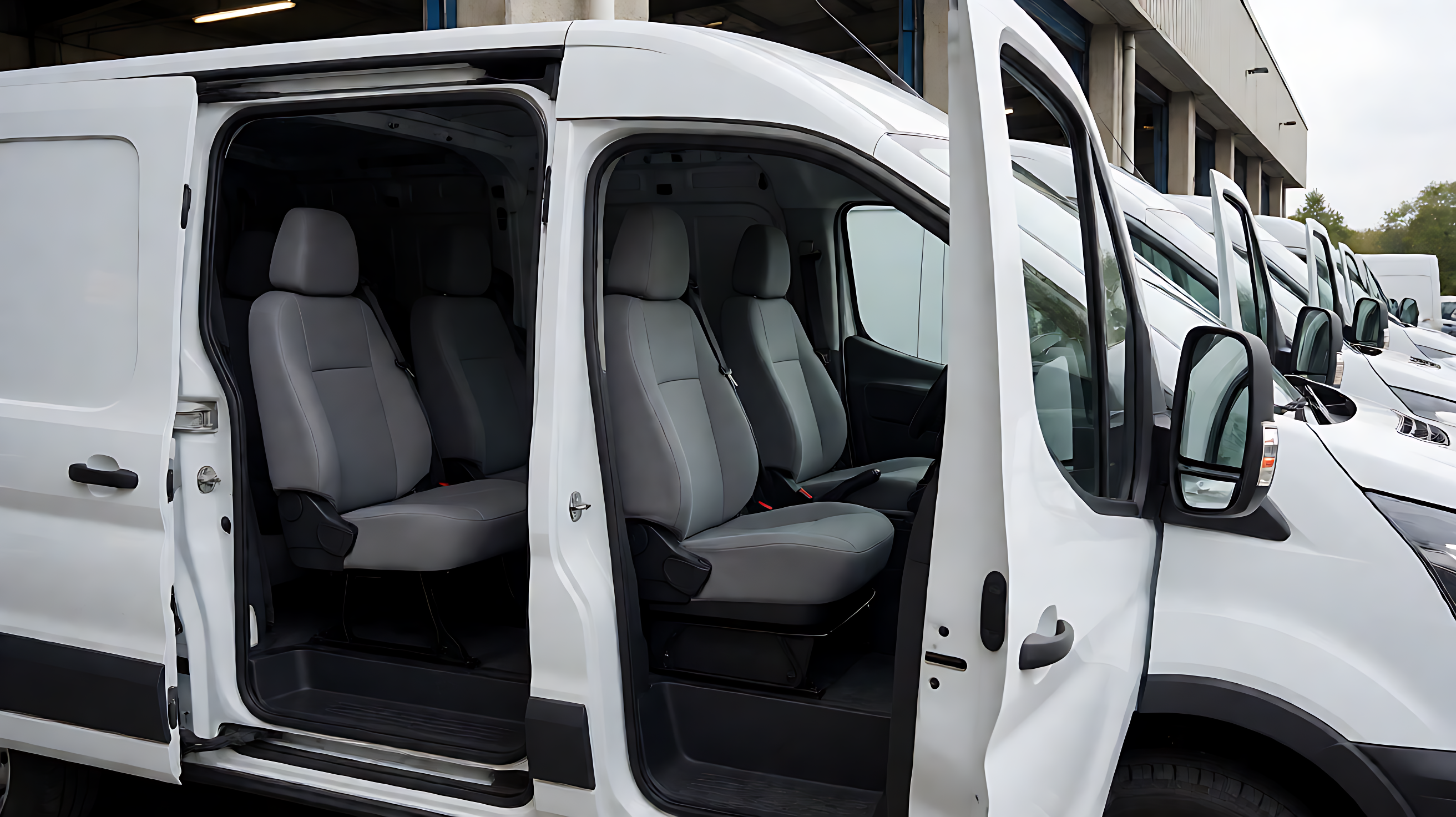
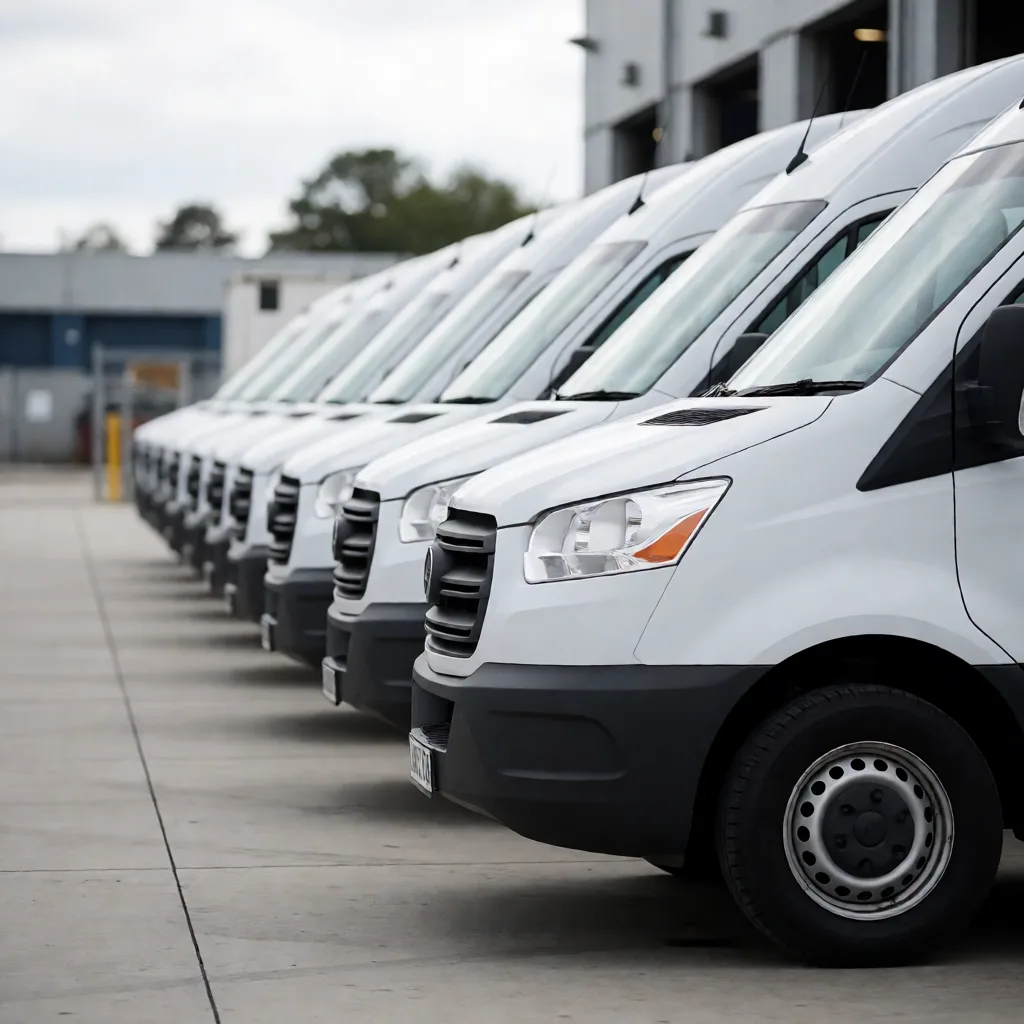
Start with a count, not a product. Group the vehicles by class and note the seat type in each: sedan, van, light truck, heavy truck, and whether the seats are bench, bucket or otherwise.
Then measure a representative seat in each group, using the same three dimensions a retail buyer would use: the inner width between the bolsters at lumbar height, the height of the lumbar zone above the seat base, and the depth of the gap behind the lower back. The measurement guide covers how to take each one.
The output of the survey is a range, not an average. The number that governs the specification is the smallest inner width in the fleet, because that is the seat that will reject an oversized cushion.
Standardise on One or Two SKUs
The strongest lever in fleet procurement is reducing the number of products. Two SKUs cover most mixed fleets: one for the majority seat type, and one for the outlier class if the difference is large enough to matter.
Standardising pays in four places at once. Purchasing becomes a single line item. Storage needs one bin rather than a rack. Issuing a replacement is trivial because there is only one part number to find. And drivers get a consistent product, which reduces the support calls that come from a fleet with six different cushions in it.
Where a single SKU genuinely cannot cover the fleet, prefer one product in two widths over two completely different designs, so covers, straps and hardware remain common between them.
What to Prioritise When Many Drivers Share the Vehicles
| Fleet factor | What it changes | What to specify |
|---|---|---|
| More than one vehicle class | One size rarely fits all | Standardise on the smallest inner width, add a second SKU only if needed |
| Several drivers per vehicle | A fixed contour suits nobody in particular | Adjustable or easily repositioned support |
| Long shifts | Comfort and heat build over hours | Breathable cover and firm retention |
| Frequent cleaning | Covers soil and wear first | Removable, washable covers, darker colours |
| Multi-year replacement cycle | Spares decide total cost | Hold spare covers and straps against one specification |
| Seat controls and airbag paths | Clearance is a safety requirement | Nothing obstructing controls or deployment paths |
| Mixed feedback from drivers | Rollout risk | Pilot across classes, then roll out |
Standardise on the seat you have least of: a support that fits the narrowest seat in the fleet can be issued to every driver, while one that fits the widest cannot.
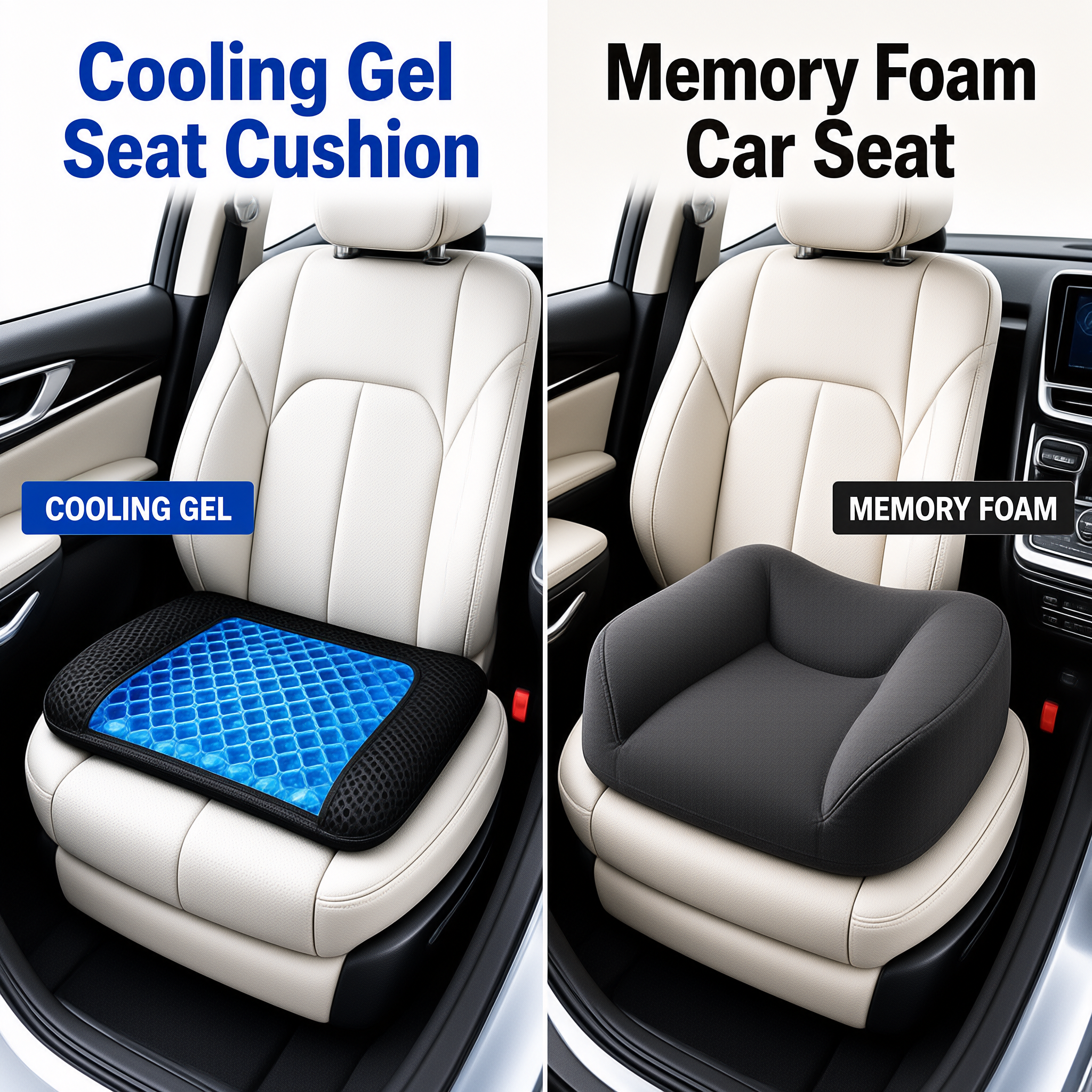
Adjustability is the single most useful property in a shared vehicle. A support that can be repositioned or retuned between drivers solves the problem a fixed contour creates, which is why inflatable and strap-mounted designs often beat a deeply shaped cushion in fleet use. The material comparison sets out how the three cores behave under that kind of use.
If a driver reports that the discomfort is under the hips rather than in the lower back, that is a seat cushion problem rather than a lumbar support problem, and the comparison of the two products explains how to tell them apart before you buy the wrong one for the whole fleet.
Safety and Fit Checks That Come First
Two checks come before any comfort consideration.
First, clearance. Whatever is fitted must not block the seat adjustment controls or sit across a lever, and it must not interfere with how the seat back reclines. A support that restricts adjustment will be removed by drivers, which wastes the purchase.
Second, and more seriously, side airbags. Many modern vehicle seats carry a side airbag inside the seat back, and its deployment path is through a seam in the upholstery. Nothing should be fitted across that path or strapped tightly over it. Before specifying a product for a vehicle with seat-mounted airbags, check the vehicle maker's guidance and avoid any fitting that covers or crosses the airbag zone.
Getting this wrong is not a comfort issue. Confirm the arrangement per vehicle class, and if a design cannot be fitted without crossing that zone, choose a different design for that class.
Run a Pilot Before a Rollout
Issue a small batch across a sample of drivers that mirrors the fleet mix, including at least one of each vehicle class and a range of driver sizes. Run it long enough for a commute or a shift pattern to be repeated many times, because a support that feels fine on the first day is not evidence of anything.
Keep the feedback structured and short: whether the support stayed in place, whether it could be positioned where the lower back needed it, whether it became warm or damp, and whether anything about the fitting interfered with the seat. Those four questions separate a product problem from a placement problem, which is the distinction that decides whether to change the product or the instructions.
Roll out on the strength of the pilot rather than on the strength of a sample. The cost of a pilot is small against the cost of re-issuing a fleet.
Budgeting and Replacement Parts
Budget for the product and the spares together. The parts that fail first are the cover, the strap and the hardware, not the foam, so holding spare covers and straps against a single specification keeps units in service without a new purchase each time.
Agree that specification in writing, with a sampling plan and an inspection step, for the same reason a retail buyer does: a fleet order is large enough that a batch-level defect is expensive to unwind. The quality inspection checklist covers what to verify, and the MOQ and pricing guide explains which inputs set the floor on the first order and why a repeat order at the same specification is the cheaper one.
If the fleet is large enough to justify a product built for it, that moves the requirement from stock supply to a custom build, which is where the supply guide for seat manufacturers and vehicle brands applies.

Frequently Asked Questions
- Should a fleet buy one size for every vehicle?
- Buy one size for as much of the fleet as possible, chosen against the smallest seat, and add a second size only where the difference is large. Fewer SKUs is the main source of savings in fleet procurement.
- Are inflatable supports a good fit for fleets?
- Often yes, because firmness can be reset between drivers. The trade-off is the bladder and valve as wear points, so hold spares and check them at each service interval.
- How many units should a pilot cover?
- Enough to include each vehicle class and a range of driver sizes, run over a realistic period. Coverage matters more than volume.
- How do we handle cleaning between drivers?
- Specify removable, washable covers and hold spares so a unit can go back into service the same day. This is also why dark covers are common in fleet use.
- Do lumbar supports affect seat airbags?
- They can, if a strap or panel crosses the deployment path in the seat back. Check the vehicle maker's guidance and choose a design that leaves that zone clear.
- Is a custom product cheaper for a large fleet?
- Not on unit price alone, but it can be on total cost, because a product sized to the fleet removes the compromises of a stock item. It requires volume and a specification to justify the tooling.
Where to Take This Next
Survey, standardise, pilot, then roll out with spares against one specification. If the fleet includes long-haul cabs, the long-haul driver guide covers what those seats need on top of the general requirement, and the product range shows which constructions exist as platforms in the sizes a mixed fleet usually needs. If you want the specification reviewed against your vehicle list, send it through the contact form.