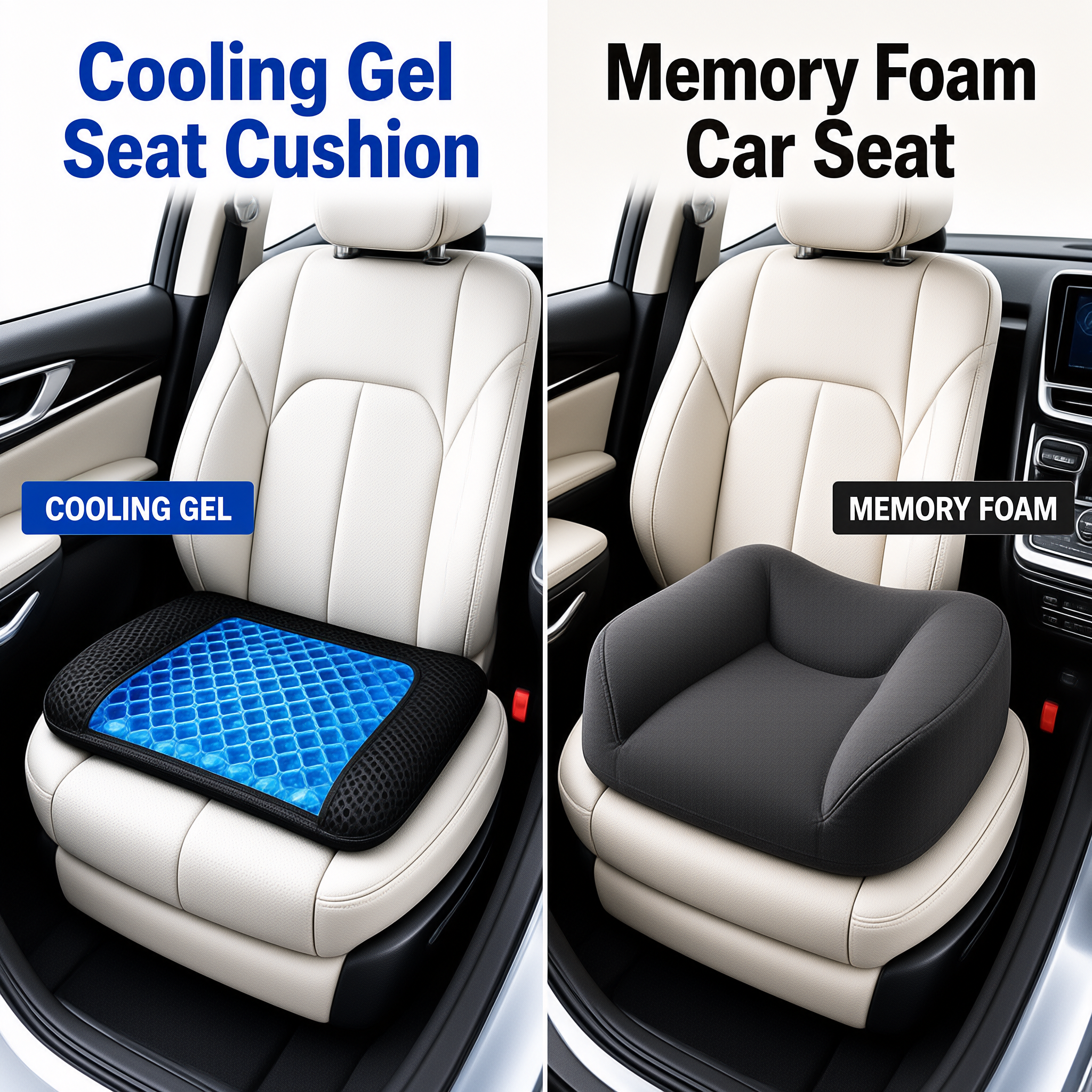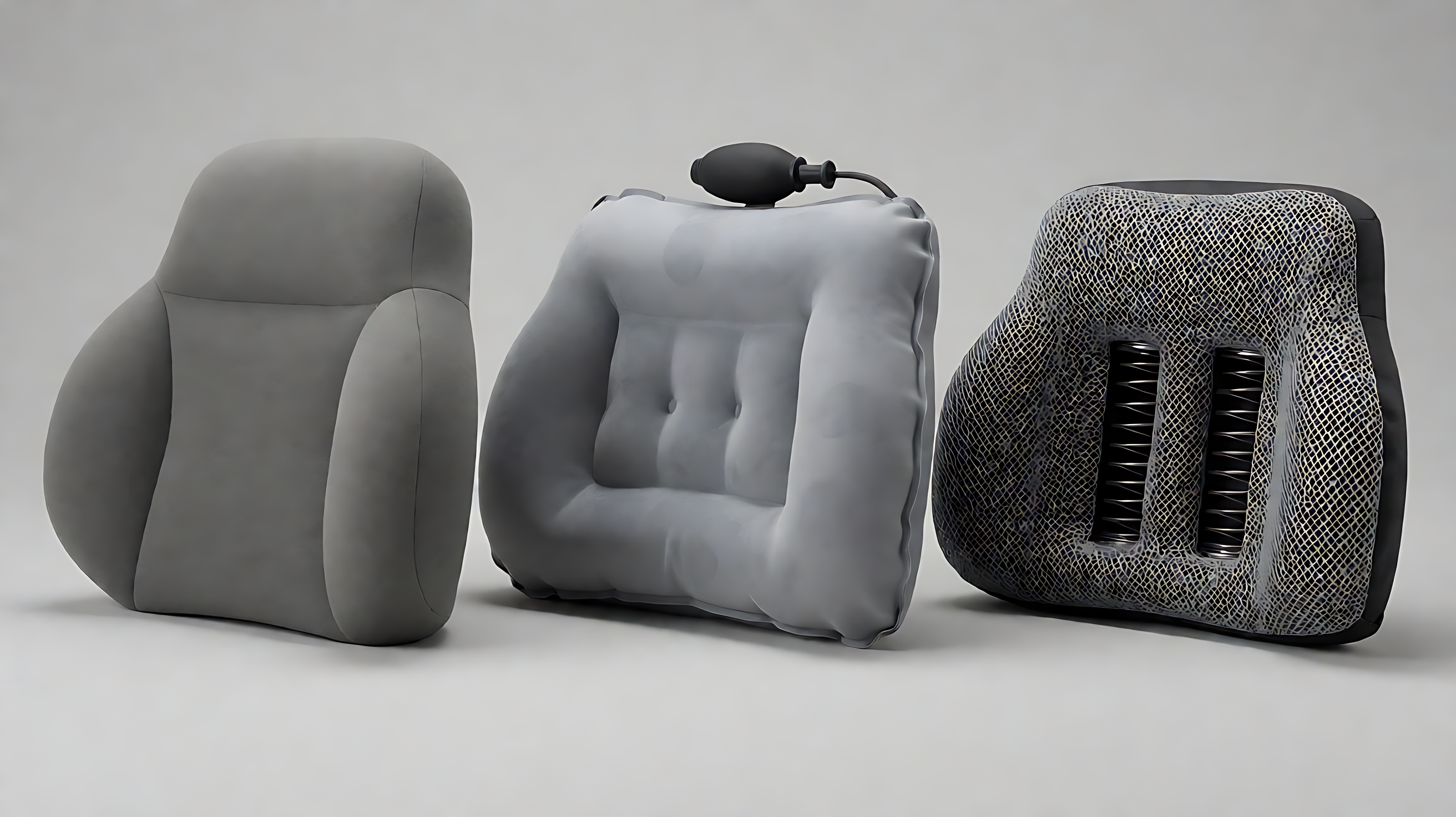
Memory foam contours and needs no adjustment, an inflatable changes firmness in a second, and a spring core stays firm and runs cool. Here is how each one behaves over time.
Memory foam, inflatable and spring lumbar supports all hold your lower back, but they fail in different ways and suit different drivers. Memory foam gives you a contour you set once, an inflatable gives you firmness you can change in a second, and a spring core gives you support that stays firm and runs cool.
Buyers usually choose between these three on feel alone, then discover the real difference months later, when one has softened, one has leaked, and one has started to creak. Knowing how each material behaves over time is what makes the choice hold up.
Key Takeaways
Memory foam contours to your shape and needs no adjustment, but it is the warmest and the bulkiest of the three.
Inflatable supports win on adjustability and packability, and lose on stability if the bladder shifts under load.
Spring and coil cores give firm, consistent support with the best airflow, but they do not contour to the individual back.
Heat and humidity shorten the life of memory foam; sharp edges and over-inflation shorten the life of an inflatable.
For a single regular driver, memory foam; for a shared vehicle, inflatable; for hot cabins and a firm preference, spring.
What Separates the Three Materials
The three products look similar in a photograph because the outside is a cover in every case. What differs is the core.
A memory foam support uses viscoelastic polyurethane. It deforms under your body heat and load, then recovers slowly, which is what produces the contouring feel. An inflatable support uses an air bladder inside a fabric or foam shell, with a hand pump to add air and a valve to release it. A spring support uses an array of coils, plastic or metal, held under a mesh cover, so the whole assembly flexes but always returns to the same shape.
That difference in the core decides almost everything else: how it feels, how it is adjusted, how warm it runs, and what eventually goes wrong with it.
Memory Foam: Contour Without Adjustment
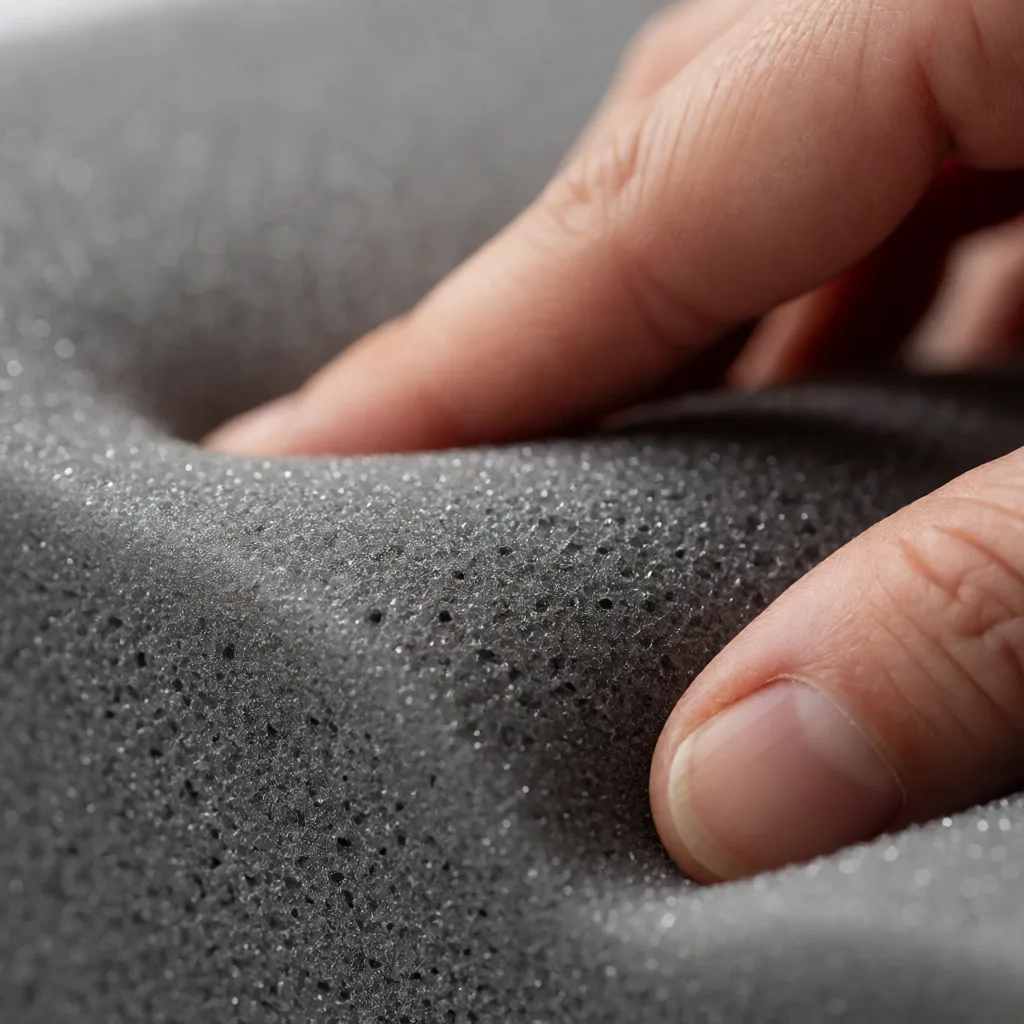
Memory foam is the default choice for a reason. It takes the shape of the back that presses into it, so the support is distributed rather than concentrated, and the driver does not have to tune anything.
Its behaviour depends on temperature. Warm foam softens and conforms faster; cold foam feels firmer and takes longer to respond. That is why the same cushion feels different in a cold morning cabin and after an hour on the road. It is also why memory foam performs best on longer drives, where the material has time to reach body temperature and settle.
Two trade-offs follow. Memory foam is warmer than the alternatives, because the same closed structure that holds a contour also holds heat, so a breathable cover matters more here than on the other two designs. And it is the heaviest and bulkiest of the three, which matters if the cushion is moved between vehicles.
Inflatable: Firmness on Demand
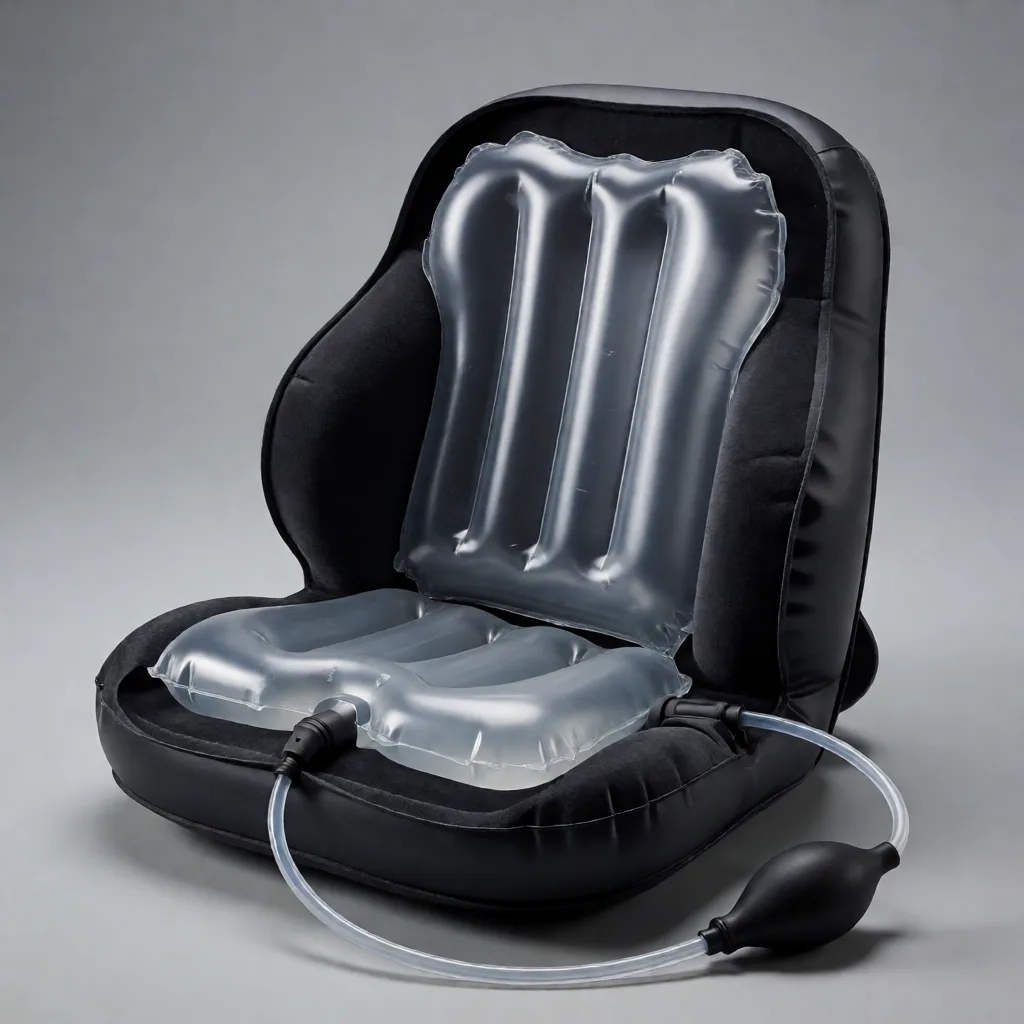
An inflatable support is the only one of the three that can be changed while you are sitting in it. Add air with the pump for a firmer push, release the valve for a softer one. For a vehicle with more than one regular driver, or for someone who wants to vary support between a short commute and a long trip, that is the decisive advantage.
The costs are stability and fragility. An air bladder is a single chamber, so it can feel less planted than foam when you shift your weight, and the support is only as even as the shell around it. Bladders and valves are also the parts most likely to develop a slow leak, and a leak usually shows up as a support that needs re-inflating every few days rather than a sudden failure.
Inflatable supports pack flatter than any foam product, which is why they dominate travel and portable versions of this category.
Spring and Coil: Firm Support That Breathes
A spring core gives a firmer, more immediate push than foam and does not depend on body heat to work. It also moves air through the structure more freely than a solid foam block, so it runs the coolest of the three and works well in hot climates or for drivers who find foam uncomfortably warm.
The trade-off is that it does not contour. Coils flex as a group, not individually to your shape, so the support is closer to a firm, even resistance than to a moulded fit. On the plus side, that resistance does not fade the way foam does — the spring rate is a property of the metal or plastic, not of a material that softens with use.
The common failure modes are mechanical rather than chemical: coils that shift inside the cover, clips that work loose, and noise once the assembly loosens.
Memory Foam vs Inflatable vs Spring Lumbar Support at a Glance
| Criterion | Memory foam | Inflatable | Spring and coil |
|---|---|---|---|
| Feel | Contouring, slow to respond | Tunable, air-like | Firm, springy, immediate |
| Adjustment | None needed | Fast, while seated | None after fitting |
| Weight and packing | Heaviest, bulkiest | Lightest, packs flat | Medium |
| Heat | Warmest, needs a breathable cover | Cool, air-filled | Coolest, best airflow |
| Main failure mode | Foam softens, takes a compression set | Bladder or valve leak | Coil noise or migration |
| Contours to one back | Yes, closely | Partly, via shell shape | No |
| Best for | One regular driver, long drives | Shared vehicles, travel | Hot cabins, firm-support preference |
Adjustability and support are two different things: an inflatable lets you change firmness in a second, while memory foam gives you a contour you never have to think about again.
Which One to Choose for Which Driver
Read the driver, not the product. Four patterns cover most cases.
One driver, one car, long regular drives. Memory foam. The material rewards time in the seat, and there is no benefit to adjustability if the seat is never shared.
One car, two or more regular drivers. Inflatable. The ability to reset firmness between drivers is worth more than the better contour, because a contour set for one back is wrong for another.
A hot cabin or a driver who runs warm. Spring and coil, or memory foam under a genuinely breathable cover. Airflow is the limiting factor, and the breathable fabric guide explains how much of that comes down to the cover rather than the core.
A driver who wants a firm, even push. Spring and coil. Foam that conforms is the wrong answer if the preference is for resistance rather than contour.
How Each Material Fails
Knowing how a product fails tells you what to inspect before you buy, which matters even more if you are buying in volume.
Memory foam fails gradually. Repeated compression at the same spot produces a compression set, and the surface stops returning to its original loft. Heat and humidity accelerate it. The visible signs are a permanent dent and a cover that no longer looks filled.
Inflatable supports fail at the seams and the valve. A slow leak is more common than a burst, and it shows up as a support that has to be topped up. Over-inflation is the usual cause, because it puts the seam under load it was never designed to hold.
Spring supports fail mechanically. The cover wears at the points where the coils press against it, and the assembly can loosen enough to rattle. The core itself rarely breaks.
The quality inspection checklist covers what to check for all three before accepting a shipment.
Frequently Asked Questions
- Is memory foam always better than inflatable?
- No. Memory foam gives a better contour for a single driver, but an inflatable is better when the seat is shared or the support has to travel. The right answer depends on how many people use the seat.
- Do inflatable lumbar supports lose air over time?
- A good one holds air for months without topping up. If it needs re-inflating every few days, the valve or a seam is leaking, and that is a defect rather than normal behaviour.
- Are spring lumbar supports uncomfortable?
- They feel firmer and less conforming than foam, which some drivers prefer and others do not. Where they clearly win is airflow, so they suit hot cabins and drivers who find foam too warm.
- Which material lasts longest?
- Spring cores usually outlast the other two, because nothing in them changes chemically. Memory foam softens as it compresses and an inflatable depends on airtight seams, so both have a wear path that a spring does not.
- Can I combine materials in one product?
- Yes, and many products do — foam over an inflatable bladder is common, and it gives contour plus adjustment. The combination carries both failure modes, so it is worth checking whether the foam is removable.
- Does a thinner memory foam support last as long as a thick one?
- Thickness helps, but density matters more. A denser foam at a moderate thickness holds its shape better than a light foam in a thick block.
Where to Take This Next
Decide from the driver and the cabin, then confirm with a measurement. If you are buying a single support for one car, the measurement guide will narrow the size before the material question comes up. To see which of these three constructions are already built as platform products, browse the product range. If you are specifying one for your own brand, the material choice decides the tooling route as much as the cost — send your specification and we will tell you which inputs set your minimum, or see how component supply works for seat manufacturers and vehicle brands.