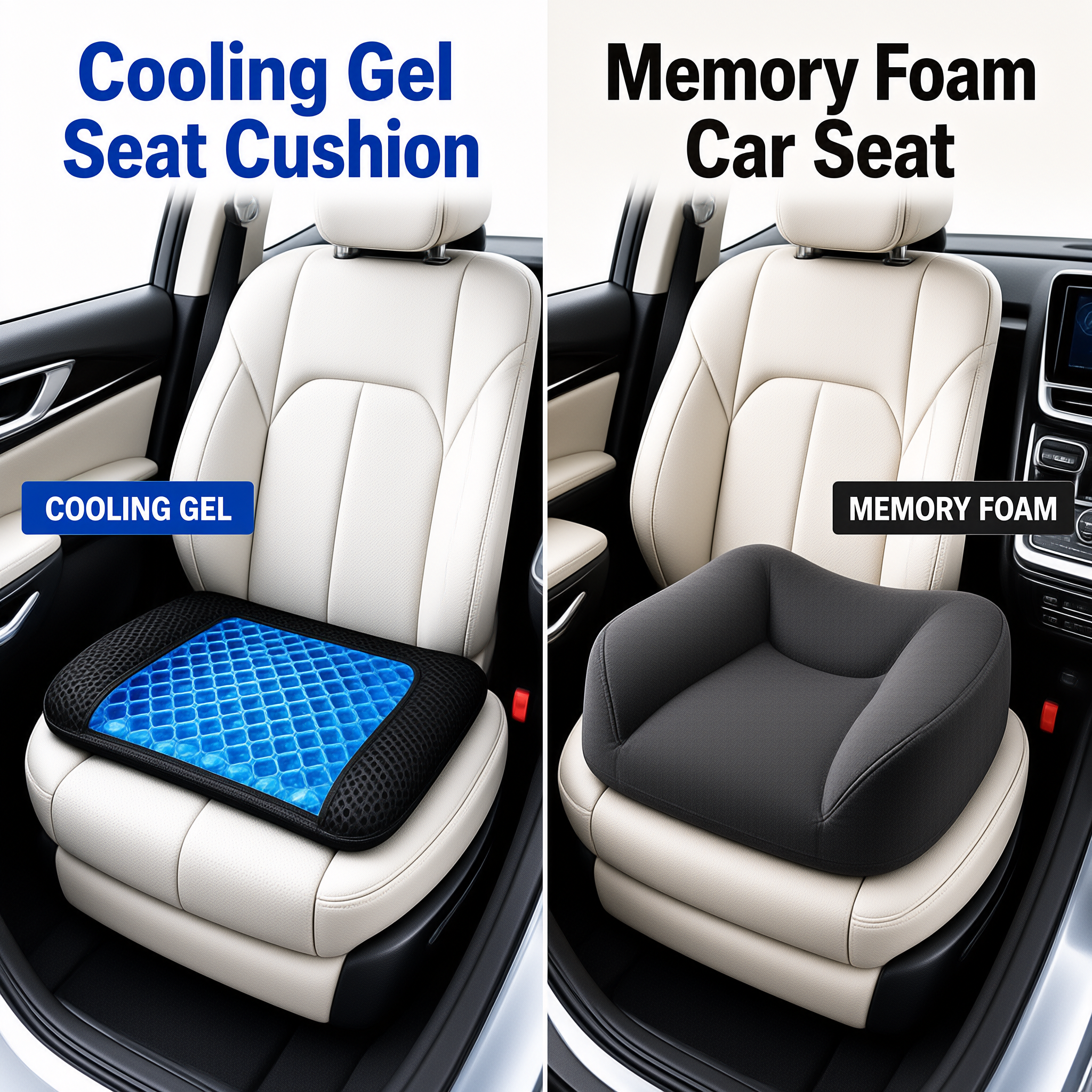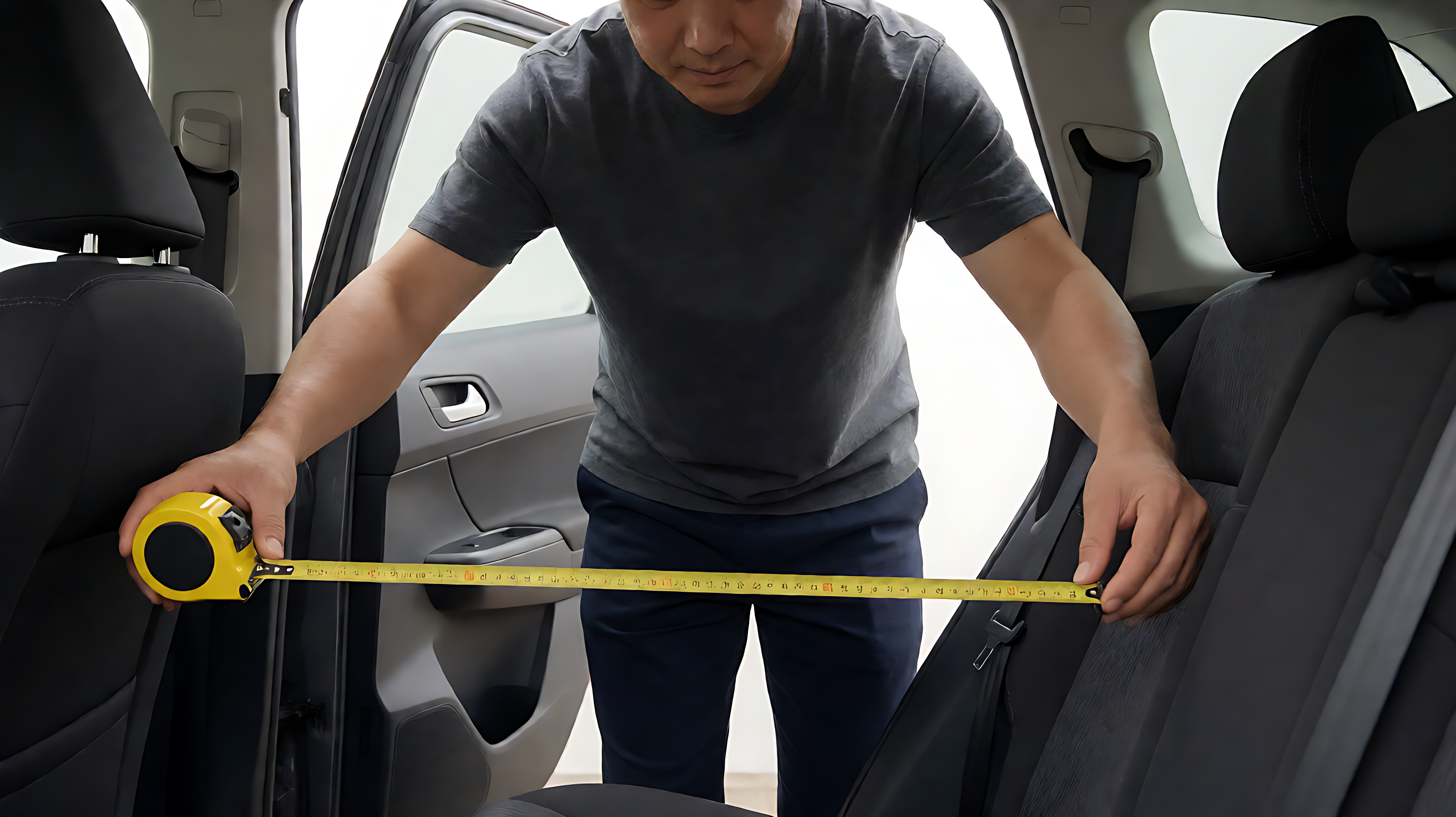
Three measurements decide whether a car lumbar support will fit: the inner width between the bolsters, the height of the lumbar zone, and the depth of the gap behind your lower back.
Three measurements decide whether a car lumbar support will fit, and none of them is the one most buyers take. Measure the width between the seat bolsters at lumbar height, the height of the lumbar zone above the seat base, and the depth of the gap behind your lower back.
Buyers who skip this step usually buy the same product twice: one that is too wide and slides off the bolsters, or one that is too thin to reach the lower back at all. Ten minutes with a tape measure avoids both.
Key Takeaways
Measure the inner width between the seat bolsters at the height your lower back actually contacts, not the full seat width.
Locate the lumbar zone on the seat back and measure its height above the seat base, so the support lands in the right place.
The depth of the gap behind your lower back sets the minimum useful thickness of the cushion.
Backrest angle matters as much as size, because a thick support on a reclined seat pushes you out of reach of the pedals.
For headrest-mounted and tuck-style designs, two extra measurements decide whether the mount is even possible.
Where the Lumbar Zone Actually Sits
The lumbar zone is the inward curve of your lower spine, and it sits above the base of the backrest rather than at the bottom of it. On most car seats the backrest is shaped shallowly enough that this curve has nothing behind it, which is exactly the gap a support is meant to fill.
Find it on yourself first. Sit in the seat as you normally drive, slide a flat hand behind your lower back and feel where it fits most naturally. That point, measured up from the seat base, is the height the support needs to reach. Find it on the seat second, by looking for where the backrest stops curving inward and starts curving outward.
Getting this height wrong is the most common reason a support feels useless. A pad that sits at the tailbone does nothing for the lower back, and one that sits at the mid-back pushes the shoulders forward.
The Three Measurements That Decide Fit
Inner Width at Lumbar Height
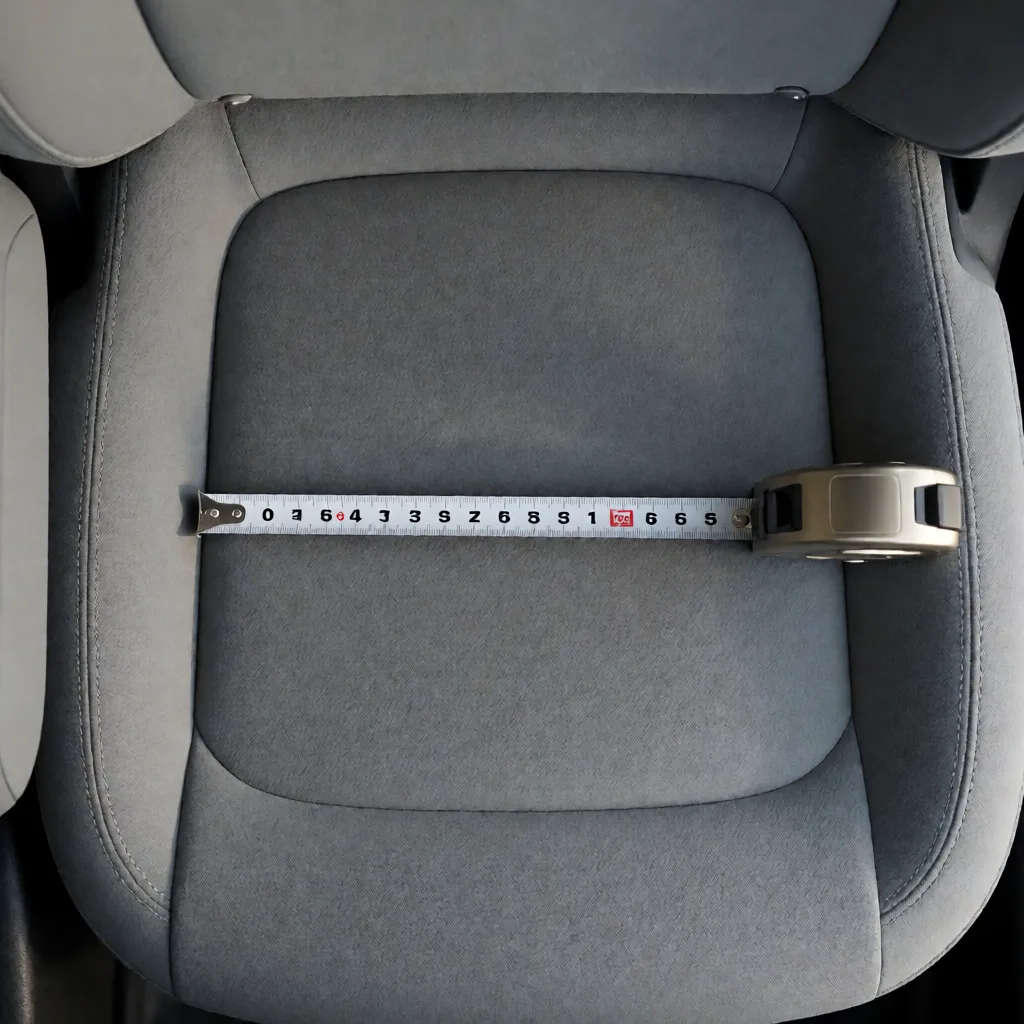
This is the measurement buyers most often get wrong. Place the tape horizontally across the backrest at the height you identified, and measure between the inner faces of the side bolsters rather than across the whole seat.
The number that matters is the space the cushion has to sit in. Side bolsters are usually built up, so a cushion that matches the outer seat width will rest on top of them, sit off-centre, and slide. Measure the clear space and choose a cushion at or slightly under it.
Lumbar Height Above the Seat Base
With the tape vertical, measure from the surface of the seat base up to the point where your lower back contacts the backrest. That gives the vertical band the support has to cover.
A support that is short but placed correctly beats a tall one placed low. If the seat back is long, a taller design gives more adjustment room, which is why upright seats in SUVs and trucks often want taller coverage than a low sedan seat does.
Gap Depth Behind the Lower Back
This one needs a straight edge. Hold a ruler or a book spine vertically against the backrest, touching the shoulder area and the top of the seat base, then measure from the straight edge to the deepest point of the backrest at your lumbar height.
That measurement is the gap the cushion has to close. It sets the minimum useful thickness: a cushion thinner than the gap leaves the lower back unsupported even when it is in the right place.
Two More Measurements for Mounted Designs
If the support attaches to something other than the seat back surface, two more measurements decide whether the design is compatible at all.
Headrest post spacing. For a headrest-mounted support, measure from the centre of one post to the centre of the other, and check the post diameter. Brackets are made to a fixed spacing, so a mismatch rules the design out regardless of how good the cushion is.
Gap under the seat back. For a tuck-style support, look for clearance where the backrest meets the seat base. If the two are joined with no gap, there is nothing for the flap to go into, and the support will work loose.
All Six Measurements on One Page
| Measurement | How to take it | What it decides |
|---|---|---|
| Inner width at lumbar height | Tape between the bolsters, at the height your lower back contacts | Whether the cushion fits cleanly between the bolsters |
| Lumbar height above the seat base | Vertical tape from the seat base to the contact point | The vertical band the support has to cover |
| Gap depth behind the lower back | Straight edge from shoulders to seat base, to the deepest point of the backrest | The minimum useful cushion thickness |
| Backrest angle | Angle of the seat back from vertical, as you actually drive | Whether a thick support will push you out of reach |
| Headrest post spacing | Centre to centre of the two posts, plus post diameter | Headrest-mount compatibility |
| Gap under the seat back | Clearance where the backrest meets the seat base | Whether a tuck-style fitting is possible |
Measure the width between the bolsters, not the width of the seat: a support that spans the bolsters will sit off-centre and slide.
Turning Measurements Into a Choice
The measurements translate into product decisions fairly directly.
If the gap between the bolsters is narrow, choose a slim or low-profile support, and expect a pillow shape to fit more easily than a rigid insert. If the lumbar gap is deep, choose the thicker end of the range for that design. If the backrest is steeply reclined, keep the thickness down, because a thick cushion on a reclined seat moves your torso further from the wheel.
Seat type gives a shortcut. If you are unsure whether to start with a seat cushion or a lumbar support, the comparison of the two maps symptoms to products before measurements come into it. For a truck or a long-haul cab, the numbers tend to be larger in every direction, and the long-haul driver guide covers what changes.

Six Measuring Mistakes That Cause Returns
Most misfits come from a small number of errors, and all of them are avoidable.
Measuring the outer seat width instead of the clear space between bolsters is the most common. Measuring at the wrong height on the backrest is the second. Measuring a different vehicle from the one you drive most often is the third, and it matters for anyone with more than one car.
The remaining three are about the seat rather than the backrest: forgetting the backrest angle, ignoring headrest post spacing, and assuming a tuck-style fitting will work without checking for a gap under the seat back. Each of these turns a correctly sized cushion into one that cannot be fitted or cannot stay in place.
If you are measuring a seat you cannot sit in — a vehicle being specified for a fleet, for example — measure the seat itself and add a margin, then confirm on the first fitted unit.
Frequently Asked Questions
- What is the most important measurement?
- The inner width between the bolsters at lumbar height. It rules out the most products, and getting it wrong causes the most sliding and off-centre fitting.
- How thick should a lumbar support be?
- It needs to be at least as thick as the gap behind your lower back, and not so thick that it changes your reach to the pedals. Measuring the gap turns this from a guess into a number.
- Do I need to measure if I am buying a universal support?
- Yes. Universal means it is made to suit a range of seats, not that it fits every seat. The measurements tell you whether your seat is inside that range.
- Can I measure the seat without sitting in it?
- You can measure the seat itself, but the lumbar zone is defined by the person as much as the seat. If you cannot sit in it, use the height of the backrest curve and allow extra adjustment room.
- Does a taller support cover more of the back?
- It covers more, but it does not place itself. Height in the product is only useful if the support can be positioned where your lower back meets the seat.
- What if my measurement falls between two product sizes?
- Choose the smaller width, since a cushion that is slightly narrow still contacts the back, while one that is too wide cannot sit flat between the bolsters.
Where to Take This Next
Write the six numbers down before you shop, and the choice narrows to one or two products. If you already know the shape you want, the material comparison decides the core, and the current product range shows which sizes exist as platforms. If you are sourcing for a fleet or for your own brand, send the measurements with your specification so the size can be matched to a mould rather than to a catalogue page.