
Approve a sample, agree a sampling plan, then inspect against both. The checklist covers foam density, stitching, straps, hardware, labelling and packaging.
Quality on a car lumbar support is decided at the sample stage, and inspection only confirms it has been held. The approved sample is the specification: if you have not signed and dated one, there is nothing to inspect against.
Buyers who inspect hard but approve loosely still end up with drift, because there is no fixed point to measure from. The inspection list below works only after a sample has been agreed in writing.
Key Takeaways
Approve a physical sample with the specification before production, and keep it as the reference.
Check dimensions, foam mass, recovery, stitching, closures, straps, hardware, colour, odour and labelling in that order.
Weighing a sample is the simplest proxy for whether the foam density matches what was agreed.
Strap elasticity and hardware burrs cause more customer complaints than foam defects do, and they are easy to check.
Agree the sampling plan and the failure threshold before the run, not after the cartons arrive.
Start With an Approved Sample, Not a Checklist
Two documents make inspection meaningful: a specification that names the materials and dimensions, and a physical sample approved against it.
The specification should state the foam grade and target mass for the size, the cover fabric and construction, the strap and hardware, the labelling, and the carton. The sample is the same product in the hand. When the two agree and both are dated, any later unit can be compared to something concrete.
Where a certification, test report or standard is part of your requirement, ask for it for the specific product and confirm what it actually covers, rather than accepting a general document. Scope matters: a report for one material does not cover the finished cushion.
The OEM/ODM customisation process covers how sampling and approval are normally sequenced on a bespoke build.
What to Inspect at Pre-Shipment
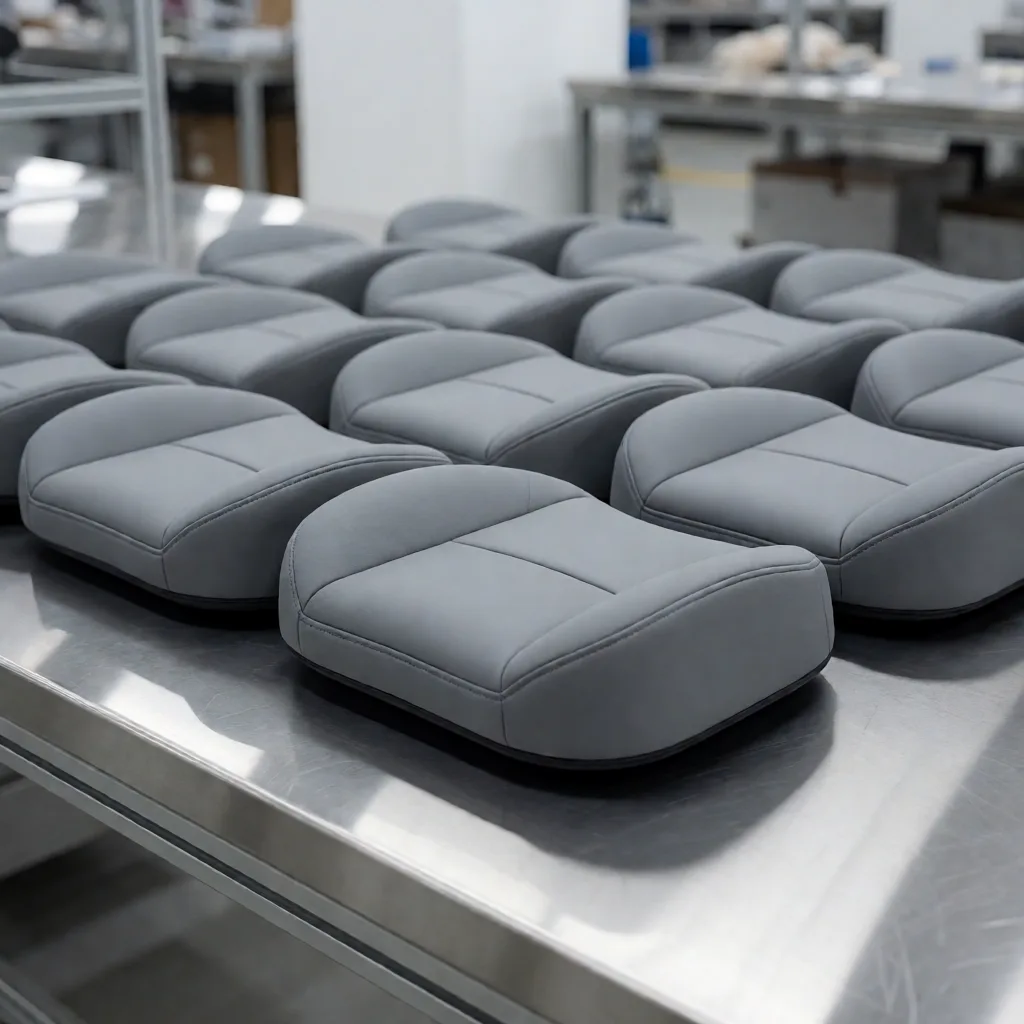
Pre-shipment inspection is a comparison exercise against the approved sample, done on units pulled at random from the finished batch.
Work in a fixed order so nothing is skipped: dimensions first, then the foam, then the cover and hardware, then the labelling and packing. Photograph anything that is outside tolerance and keep the photographs with the report, because a written description of a stitching fault is much weaker than a picture of it.
Pull the sample yourself if the volume justifies it, or agree in advance who draws it and how. A batch that is inspected from cartons the supplier chose is not the same as a random sample.
The Inspection Checklist
| Check | What to look for | Why it matters |
|---|---|---|
| Dimensions | Cushion and cover within the agreed tolerance | Fit in the seat and consistent carton packing |
| Foam mass for the size | Weigh a sample against the agreed target | The simplest proxy for the right density |
| Recovery after compression | Press, release, watch it return | Compression set is the main late-life failure |
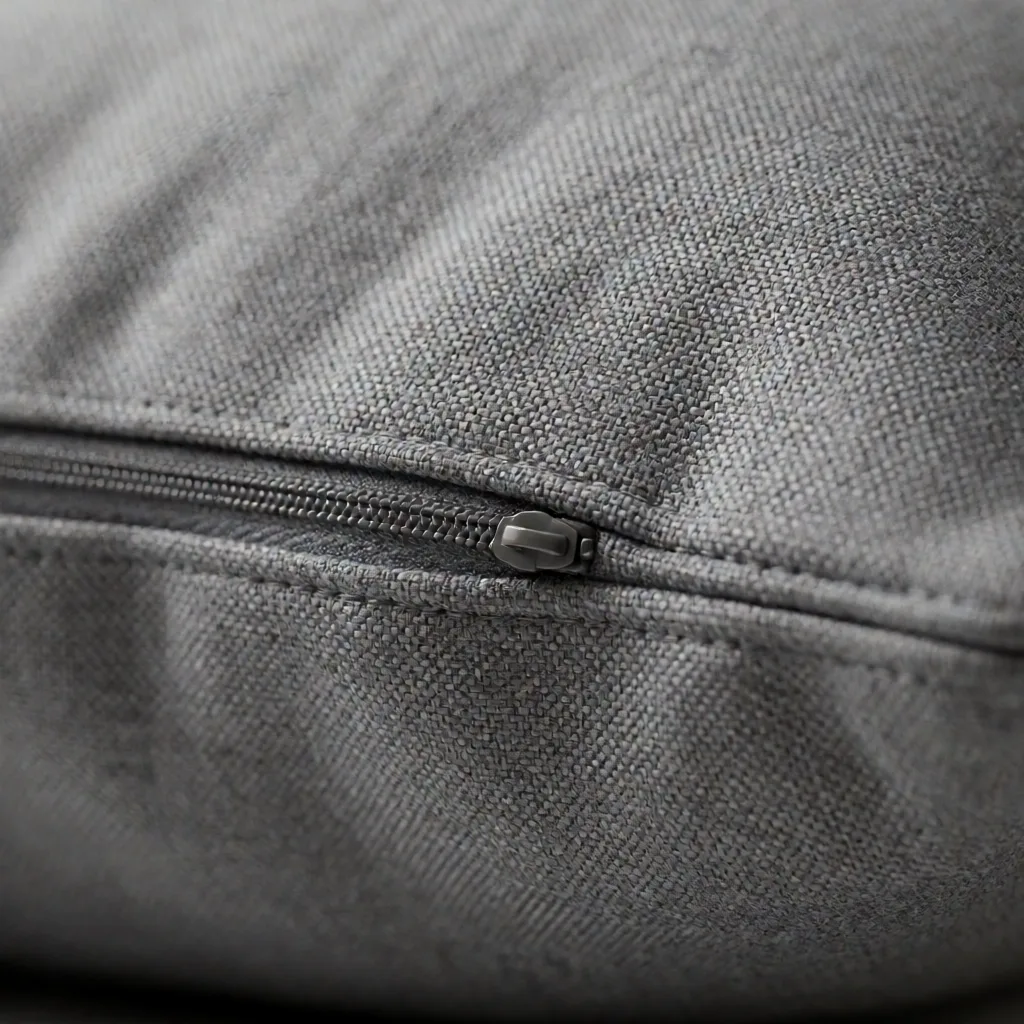
| Cover stitching | Even stitch length, no skipped stitches, no puckering | Seams fail before anything else does |
| Zipper and closure | Runs freely, no gap at the ends | A failed closure scraps the unit |
| Strap elasticity and length | Measure at rest and stretched | Over-stretched elastic abrades seat fabric |
| Hardware | Buckles, hooks and any metal for burrs and corrosion | Contact points damage upholstery |
| Colour | Compare against the retained standard | Batch variation is the most visible defect |
| Odour | Open a carton and smell it | Trapped odour signals a foam or adhesive problem |
| Marking and labels | Care label, brand label, size marking | Missing or wrong labels cannot be fixed at retail |
| Packaging | Carton strength, print position, units per carton | Transit damage and retail presentation |
| Documentation | Specification, approved sample, report, photographs | The only thing that settles a dispute later |
The approved sample is the specification: if you have not signed and dated one, you have nothing to inspect against.
How to Sample: How Many Units to Open
Agree the sampling plan before the run starts. In practice that means deciding how many units are pulled from how many cartons, and at what point the batch is rejected.
A workable default is to draw from several cartons rather than several units from one, since a single carton can be correct while the batch around it is not. Inspect the full checklist on a small number of units and a shorter list on a larger number, so obvious defects are caught across the batch and subtle ones are examined properly.
Set the failure threshold in advance. Deciding after the fact whether three defective units out of fifty is acceptable usually ends in an argument rather than a decision.
If inspection at the factory is not practical, agree that the retained sample and the inspection report travel with the shipment, and inspect on arrival before the goods are distributed. The cost of a return is much higher than the cost of a slower first order.
In-Line Checks Versus the Final Inspection
Where the volume justifies it, some checks are better done while the batch is still being made rather than after it is finished.
In-line checks catch the defects that are cheap to fix at the machine: seam quality, strap length, and the placement of a label. Once those units are finished and packed, correcting them means unpacking and reworking, which is why a supplier that checks its own output during the run produces a cleaner final inspection.
The final pre-shipment inspection answers a different question. It is not "is each unit perfect" but "is this batch the batch I approved", which is why it compares against the retained sample rather than against an ideal. Both steps matter, and a supplier that only offers the second one is asking you to catch what it did not.
Test Items Worth Doing Yourself
Some checks are cheap enough that a buyer can do them directly, and they catch the defects that matter most.
Weigh a unit. Foam is bought by density, so a cushion that should be a certain mass for its volume and is noticeably light is very likely under-dense, which shows up as early compression set rather than as a fault out of the box.
Stretch the strap and let it go. Elastic that has lost its return, or that is longer than agreed, will let the support creep down the seat back in use. Measure at rest and stretched rather than judging by feel.
Press the foam and time the recovery. It should come back with a spring, not slowly sink.
Run the zipper end to end and look at the ends of the seam. Then look at the cover where the foam presses hardest; that is the point where a cover wears through first.
When Something Fails
A failed check is useful only if it is quantified. Record how many units were inspected, how many failed, and which check they failed on. That turns "there are some bad ones" into a number the supplier can act on.
Then separate the failure types. A dimension or label error is usually correctable in the batch. A foam or density problem is not, because it goes back to material that has already been used. Treating the two the same is how a fixable batch becomes a rejected one, or the reverse.
If a batch is rejected, the same specification and sample that supported the inspection also support the discussion about replacement. That is the practical reason for keeping the paperwork.
Frequently Asked Questions
- Is inspection necessary if the sample was good?
- Yes. The sample proves the product can be made to the specification; inspection is what shows whether it was. Drift between the sample and the production run is normal and is exactly what the check catches.
- What is the single most useful check?
- Weighing a unit for the given size. It is fast, objective, and it detects the defect that degrades the product most over time.
- Should I inspect at the factory or on arrival?
- At the factory if you can, because a problem can still be corrected there. On arrival if you cannot, but inspect before the goods are distributed.
- How much should I expect to pay for inspection?
- It depends on scope and on who does it. What matters more is agreeing the plan and the threshold in advance, since a plan decided afterwards is not a plan.
- Do I need a test report for every order?
- Not for every order, but it is worth having the material and product tested once at the start, so a later change can be measured against it. Ask for the report for the specific product and confirm its scope.
- What are the most common defects on this product?
- Strap and hardware problems, seam quality, and colour variation between batches. Foam defects are less common but more expensive when they do occur, because they affect the whole batch.
Where to Take This Next
Write the specification, approve a sample, agree the sampling plan, then inspect against all three. If you are sourcing a breathable product, the fabric and breathability guide adds the cover checks that matter most in hot markets, and the MOQ and pricing guide explains why specifying tightly at the start is cheaper than correcting afterwards. To have a specification reviewed before you commit to a run, send it through the contact form, or see how the OEM/ODM process sequences approval and inspection on a custom build.