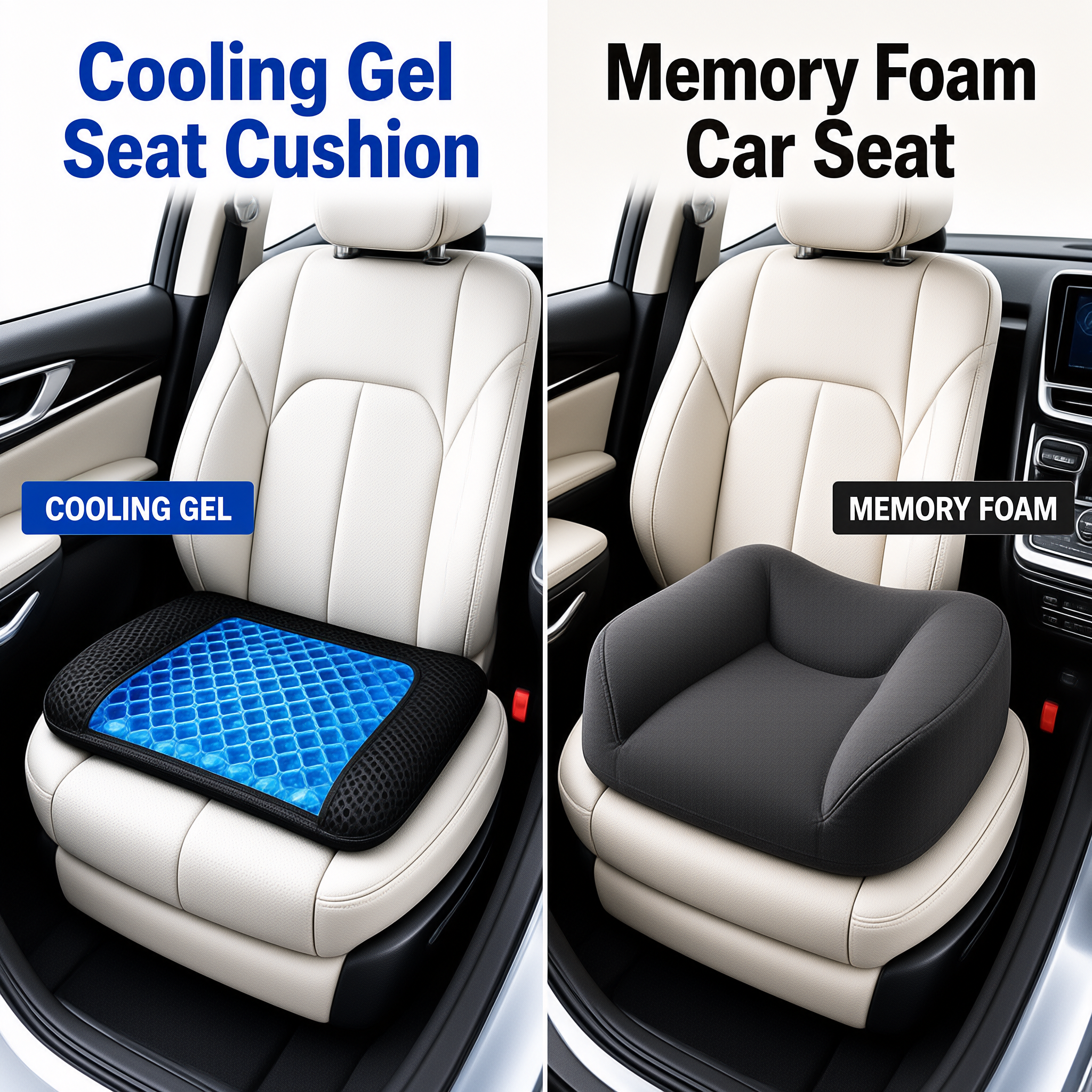
Breathability is decided by the cover, not the foam. Compare mesh, 3D spacer fabric and closed knit, and learn what to check on a sample before you commit to a run.
Breathability in a car lumbar support is decided by the cover, not by the foam, and a closed cover will undo a good core every time. Air has to leave through the fabric, so an open foam inside a sealed cover is still a warm cushion.
Drivers notice this as a hot, damp patch on the lower back after forty minutes or so, and as a cushion that starts to grip instead of sitting still. It is one of the most common reasons a support is abandoned after a few weeks, and it is almost entirely a fabric decision.
Key Takeaways
Heat builds where the back meets the cushion, and it leaves through the cover, so the fabric is the deciding part.
An open-cell foam or a spacer core helps only if the cover over it actually passes air.
The back face of the cushion matters as much as the front, because that is where the air goes next.
Dark covers absorb more heat in a parked car, which matters in a hot climate more than the mesh pattern does.
A removable, washable cover keeps airflow alive; a fabric that has packed down or matted will not recover.
Why Heat Builds Up Behind Your Back
Your lower back is in continuous contact with the cushion, and contact means no airflow. Sweat cannot evaporate, so moisture collects where the skin and the cover meet. That is the damp patch drivers describe, and it has nothing to do with the seat being badly made.
Two things make it worse. A closed fabric traps the moisture against the skin. A solid foam core, and a solid back panel, leave the moisture nowhere to go. The fix is a path: air through the cover, through the core, and out the back.
This is also why breathability and firmness get confused. A cushion that feels cooler often feels firmer too, because the same open structure that lets air through compresses more evenly than a solid block of foam.
What Makes a Cover Breathable
Two structural things separate a breathable cover from a warm one.
Open Structure
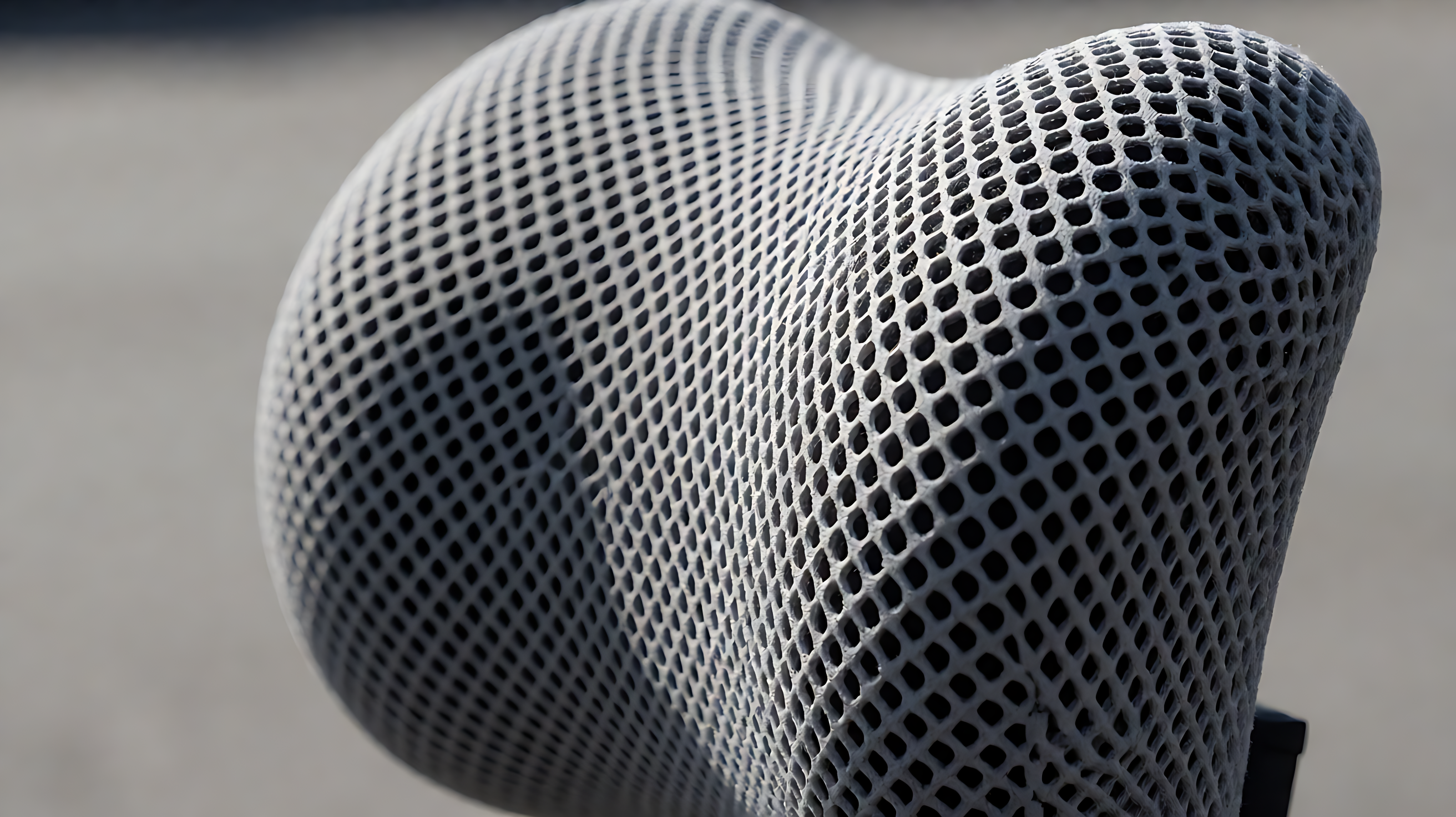
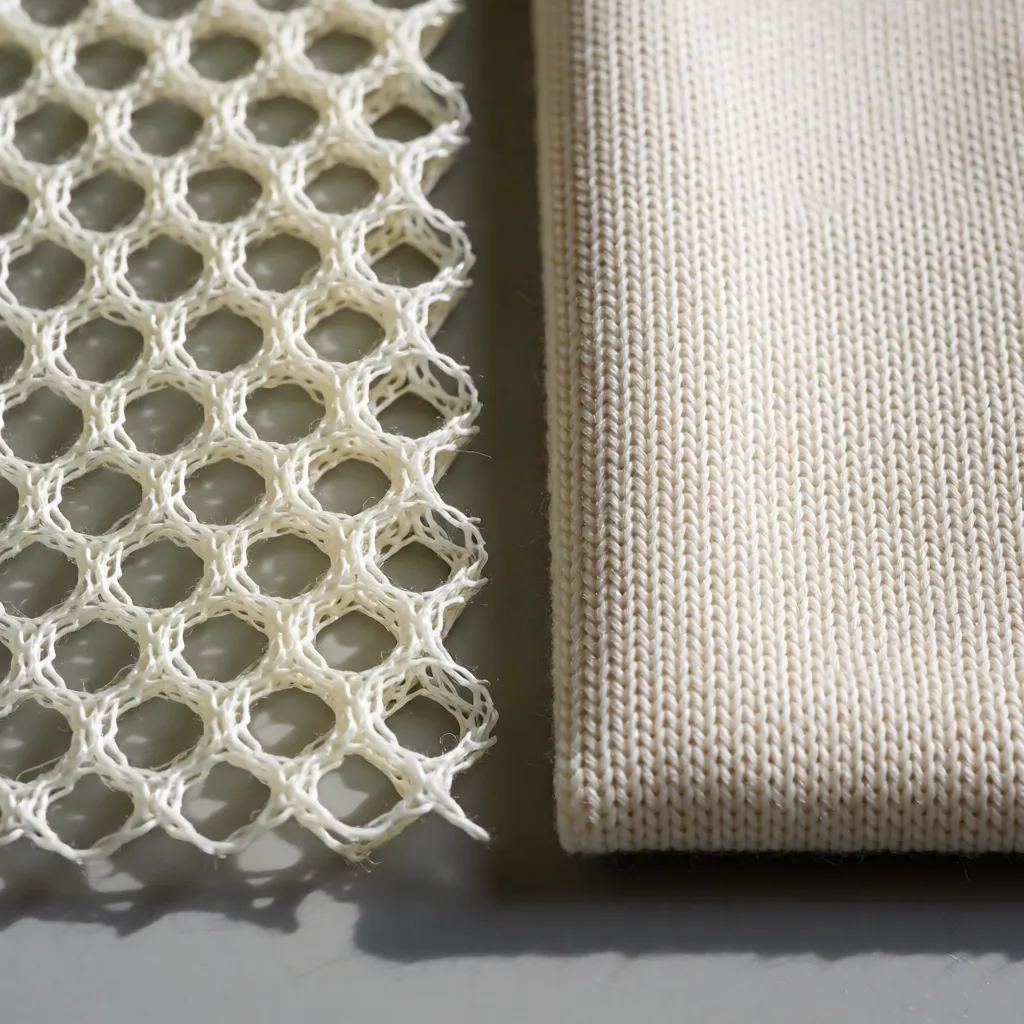
The most basic form is mesh: a knitted fabric with visible holes. Air moves through the openings rather than around the edges of the cushion, which is why a single-layer mesh cover is noticeably cooler than a solid knit, even when the two are made of the same polyester.
The limit is support. A thin mesh flattens against the foam underneath once it is loaded, and a flattened mesh has no openings left. Mesh thickness and the stiffness of the yarn decide how well it holds its openings open.
3D Spacer Fabric
Spacer fabric solves that by building the air gap into the material. Two knitted faces are held apart by a layer of spacer yarn, so the fabric is a few millimetres thick and stays open under load. Air moves through the structure even when the cushion is compressed, and the same layer cushions the contact point.
That combination is why 3D spacer mesh shows up in the better breathable products: it does two jobs, airflow and pressure distribution, in one layer. It also costs more per metre than a plain knit, which is the main reason a breathable version of the same cushion carries a higher cover cost.
Cover Type Comparison
| Cover type | Airflow | Durability | Feel | Usual use |
|---|---|---|---|---|
| Closed knit or microfibre | Low | High abrasion resistance | Soft, warm | Cool climates, winter use |
| Single-layer mesh | Medium to high | Moderate | Light, textured | General use |
| 3D spacer mesh | High | Good, holds shape under load | Firm with cushioning | Hot climates, long drives |
| Perforated foam-backed fabric | Medium | Good | Smooth | Products where a smooth surface is wanted |
A breathable core under a closed cover is not a breathable cushion: the air has to get out through the fabric, not just through the foam.
The right choice depends on the market, not on a single best fabric. A cushion sold into a cool climate can carry a warmer, softer cover and gain comfort from it. The same cushion sold into a hot one needs spacer mesh, and the cover cost is part of the product cost.
The Back Face Matters as Much as the Front
Most of the attention goes to the surface the driver touches. The back face decides where the air goes once it gets through.
A cushion with a solid back panel traps air against the seat back and stalls the flow. A cushion with an open back, a mesh back panel or vent channels gives the air somewhere to exit. This is why two cushions with identical front covers can perform completely differently, and why the specification should always name the back face separately.
It is also the easiest thing to check on a sample: hold the cushion up, and see whether you can see light through both faces rather than only the front.
Colour, Dye and Cabin Temperature
Fabric structure decides airflow. Colour decides how much heat the cushion absorbs before the driver ever sits down.
A dark cover in a car parked in the sun reaches a higher surface temperature than a light one, and a cushion that starts warm takes longer to feel comfortable. In a hot market that is a real cost, and it is worth weighing against the fact that dark covers hide wear better over a long service life.
Dye method matters for a different reason. Deep, saturated colours and print processes take more processing, and a print adds a setup to the packaging and branding side of the order. The MOQ and pricing guide explains how those minimums accumulate on top of the product minimum.
Care and Cleaning Without Losing Airflow
A breathable cover only stays breathable if it is maintained.
Dust and skin oils fill the openings in a mesh, especially in a dry, dusty cabin. A removable cover that can be washed is the practical answer, and it also extends the product life, because the cover usually wears out before the foam does.
Care instructions should match the fabric. Spacer mesh holds its structure through gentle washing and air drying, but tumble drying can collapse the spacer layer, which permanently removes the air gap the fabric was bought for. A cover that has been washed hot and dried hot will look fine and stop working.
For products sold in volume, the care label is worth specifying at the same time as the fabric, since it carries its own minimum. The private label, OEM and ODM comparison covers which items in a branded product carry separate setup costs.
How to Check Breathability When Sourcing
Four checks will separate a genuinely breathable cover from one that only looks like mesh.
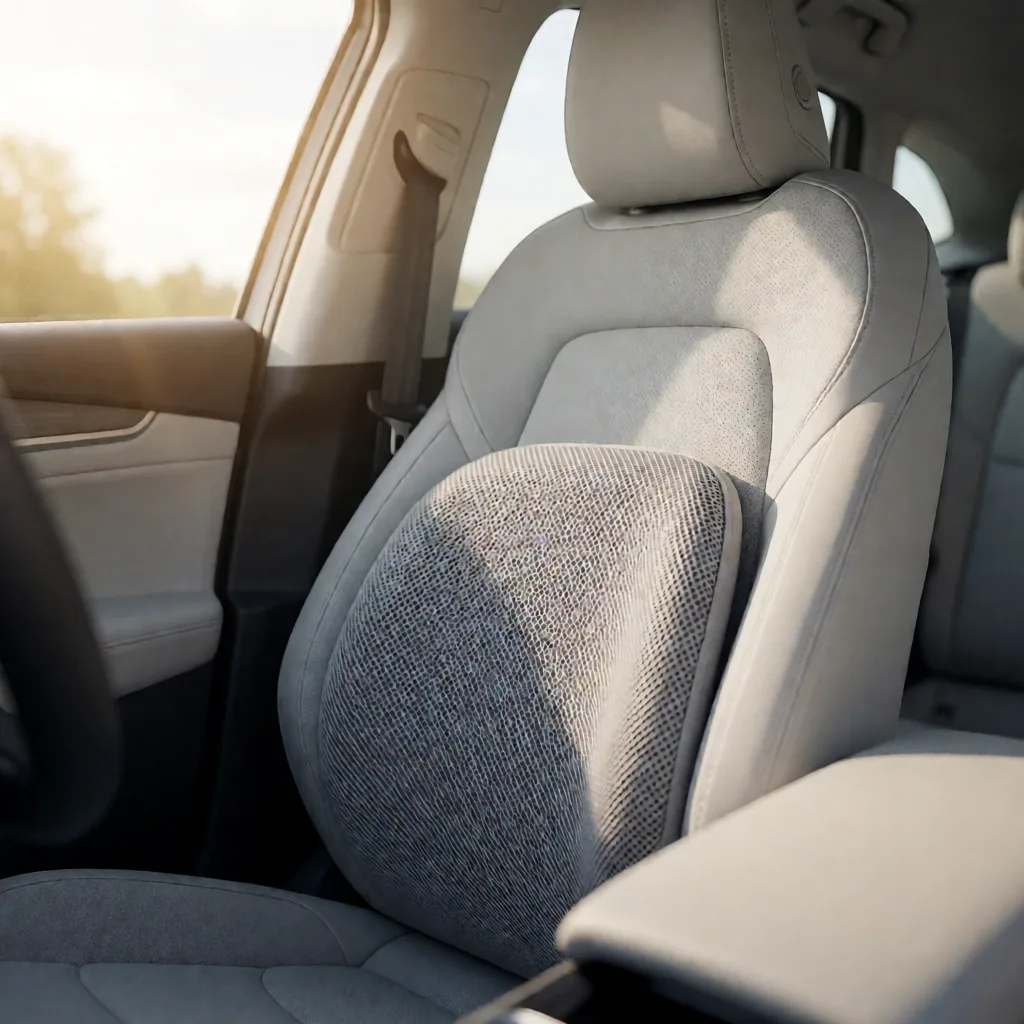
Hold the cushion against a light source and look for openings through both faces, not just the front. Bend it and watch whether the mesh stays open or flattens shut. Press the cover and check whether the spacer layer springs back or stays crushed. And turn it over: an open back face is the sign that the airflow path was designed rather than assumed.
Those are the same checks that catch most cover defects before a shipment is accepted, alongside the rest of the quality inspection checklist.
Frequently Asked Questions
- Does a breathable cover really make a noticeable difference?
- Yes, over a drive rather than instantly. The difference shows up as whether a damp patch forms on the lower back after half an hour, which is exactly when a cushion stops being comfortable.
- Is 3D spacer mesh better than ordinary mesh?
- For airflow under load, yes, because the spacer layer keeps the openings open when the cushion is compressed. Ordinary mesh is cheaper and still much cooler than a closed knit.
- Can I add a breathable cover to an existing cushion?
- Usually not, because the cover is cut and sewn to the foam shape. If breathability matters, it is better to choose a cushion that was built with an open cover and an open back.
- Does a breathable cover make the cushion feel less supportive?
- The opposite is more common. Spacer fabric adds a cushioned layer over the foam, so the cushion often feels both cooler and slightly firmer in a way drivers describe as more supportive.
- Will the mesh wear out faster than a solid fabric?
- Mesh is generally the less abrasion-resistant option, which is why removable and replaceable covers matter on a breathable product. Constructed well, the cover still outlasts the foam.
- Is memory foam compatible with a breathable cover?
- It has to be. Memory foam is the warmest core available, so it depends on the cover more than any other material does. See the comparison of foam, inflatable and spring cores for how each behaves in a warm cabin.
Where to Take This Next
Decide the market first, then the cover, then the core. A cushion going into a hot climate should be specified from the fabric outward, and the cover specification is the right place to start. To see which breathable constructions are already built as platforms, browse the product range, and if you are choosing between a stock cover and a custom one, see the FAQ for the questions buyers ask most often about fabric, minimums and sampling.