Packaging carries its own minimum, separate from the product. Match the format to the sales channel, and split the carton decision from the cushion decision.
Retail packaging is a second product with a second minimum, and treating it as a detail of the first order is what makes a small launch expensive. Decide the carton after the cushion, and split the two if you are launching online first.
A plain carton and a printed retail box sit at opposite ends of the same scale, and the difference is a print setup that is counted separately from the product. Understanding which format your sales channel actually requires is what keeps the first order small.
Key Takeaways
Packaging carries its own minimum, separate from the product, and the setup is in the print and the die, not the material.
The sales channel sets the minimum viable format: online needs protection, retail shelf needs a printed pack that can sell the product.
Barcodes, care information and retailer labelling are part of the pack specification, not an afterthought.
Print method drives the setup cost, from flexo through offset to digital, and they suit different volumes.
Plain packaging on the launch run and printed packaging on the second order is the cheapest way to sequence it.
Why Packaging Deserves Its Own Decision
The product and the pack are bought on separate terms. The cushion has a minimum set by foam, fabric and tooling. The pack has a minimum set by the print method and the die, and the two minimums do not have to be met at the same time.
That is the useful fact for a first order. You can produce a launch run in a plain carton and add the printed pack later, once the volume is known, without changing the product at all.
The mistake is deciding the pack first because it is the visible part of the brand. A printed box designed before the sales channel is settled usually ends up either over-specified for a marketplace listing or under-specified for a retail shelf.
The Formats, From Plain to Premium
| Format | What it requires | Best channel | Notes |
|---|---|---|---|
| Poly bag | None | Online, marketplace | Cheapest protection, no print setup |
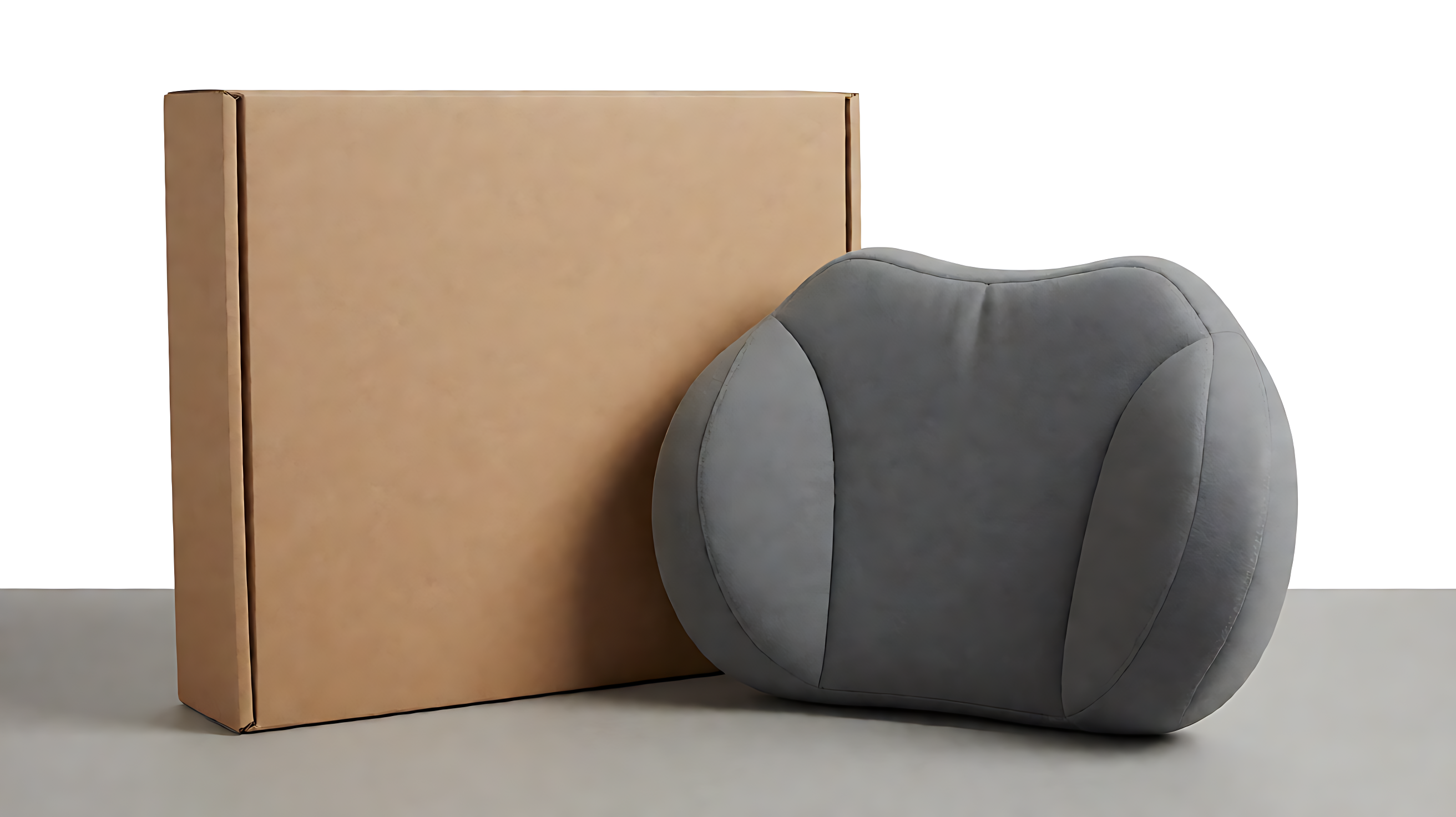
| Plain corrugated carton | Carton die only | Online, bulk, fleet | Protects in transit, no print setup |
| Printed carton or sleeve | Print setup plus die | Retail shelf, marketplace | Carries brand and product information |
| Rigid gift box | Print setup, die, assembly | Gift and premium retail | Highest presentation, highest minimum |
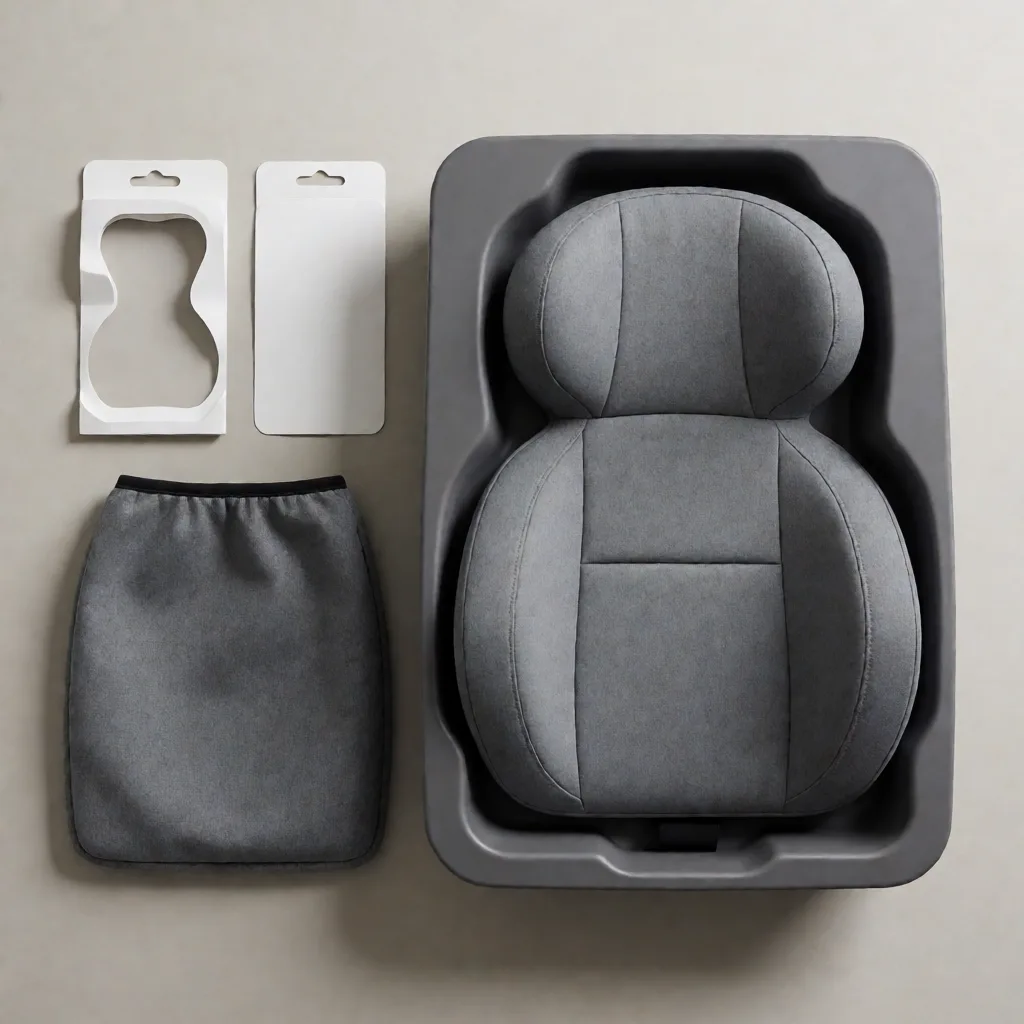
| Moulded insert tray | Tooling | Gift and premium retail | Holds the product in place, own tooling |
| Hang tag or label | Small print setup | All channels | Carries barcode, size and care information |
| Fabric carry sleeve | Cut-and-sew setup | Retail and travel | Doubles as a travel bag, adds fabric metres |
| Work down that list only as far as the channel demands. Each step down adds a setup that has to be amortised, and a setup that is paid for by volume you do not have yet is a cost you carry forward. |
Let the Sales Channel Choose the Format
Selling online only. The pack has to survive shipping and present well when it is opened. A plain carton with the cushion protected inside is often enough, and for marketplaces a poly bag inside the carton is standard practice. Printed packaging matters if the unboxing is part of the product experience; otherwise it is money spent where the customer does not look.
Selling on a marketplace. The requirements are set by the platform: a scannable barcode, an outer pack that survives handling, and enough protection that the product arrives undamaged. A printed pack is optional unless the listing photographs the box.
Selling on a retail shelf. Here the pack has to sell. It needs to communicate what the product is, carry the brand, and meet the retailer's requirements on barcode, labelling and shelf dimensions. This is the format where print quality and die accuracy matter, and where the retailer's own specification sheet governs more than the brand's preference.
Selling as a gift or premium set. The pack is part of the product. A rigid box with an insert tray and a sleeve adds two or three separate setups and is only worth it when the price point and the volume support it.
Barcodes, Labels and Retailer Requirements
The items that most often surprise a first-time buyer are the small ones.
A barcode needs a scannable print of sufficient size and contrast, and on a printed box it is part of the artwork, which means it is fixed for the run. A care label on the cushion tells the customer how to wash the cover, and it sits on the product rather than the pack, so it carries its own small print minimum. A hang tag carries size and material information, and it has to be attached, which is a small assembly step.
None of these is difficult, but each is a separate item with its own setup, and they must be specified before the artwork is final. Retailer packaging specifications also vary, and the retailer's document wins over the brand's preference every time.
The private label, OEM and ODM comparison explains which of these items fall inside each sourcing route, since a private label order typically includes the branding items while an OEM order includes the pack design as well.
Packaging is a second product with a second minimum: decide the carton after the cushion, and split the two if you are launching online first.
Print Methods and What They Cost in Setup
The print method is where most of the packaging minimum lives, and the three common options behave differently at different volumes.
Flexographic printing uses a plate per colour and suits corrugated cartons. Setup is comparatively modest, quality is functional rather than fine, and it is the usual choice for shipping cartons that carry a logo and basic information.
Offset lithographic printing produces the print quality a retail shelf expects. It has a higher setup, and it is usually combined with a printed sheet laminated onto corrugated board so that a carton can carry retail-quality graphics.
Digital printing has little or no plate cost, which makes it the practical option for a short run or a test. The unit cost is higher, so it is not the cheap route at volume, but it removes the setup that makes a small printed run uneconomic.
The choice follows volume, not taste. If you are unsure of the volume, digital printing on the first run and a plate-based method on the second is a reasonable sequence.
Protection in Transit
Packaging has to work in transit before it works on a shelf.
Carton strength is graded, and a heavier product needs a stronger board or an internal support so the cushion does not compress the carton from the inside. Cartons should be sized to the product rather than filled with void material, because space inside a carton costs money to ship and allows the product to move.
For air freight, the product itself is often compressed to reduce volume, and the pack has to accommodate that. If the cushion is vacuum compressed for shipping, the pack needs to allow for recovery without holding the product in a flattened state.
The same checks used on the product apply to the pack at inspection: dimensions against the agreed standard, print position, colour against the retained reference, count per carton and carton integrity. The quality inspection checklist covers the packaging line items alongside the product ones.
Sequencing: Launch Plain, Print Later
The cheapest sequence for a new product is also the least risky.
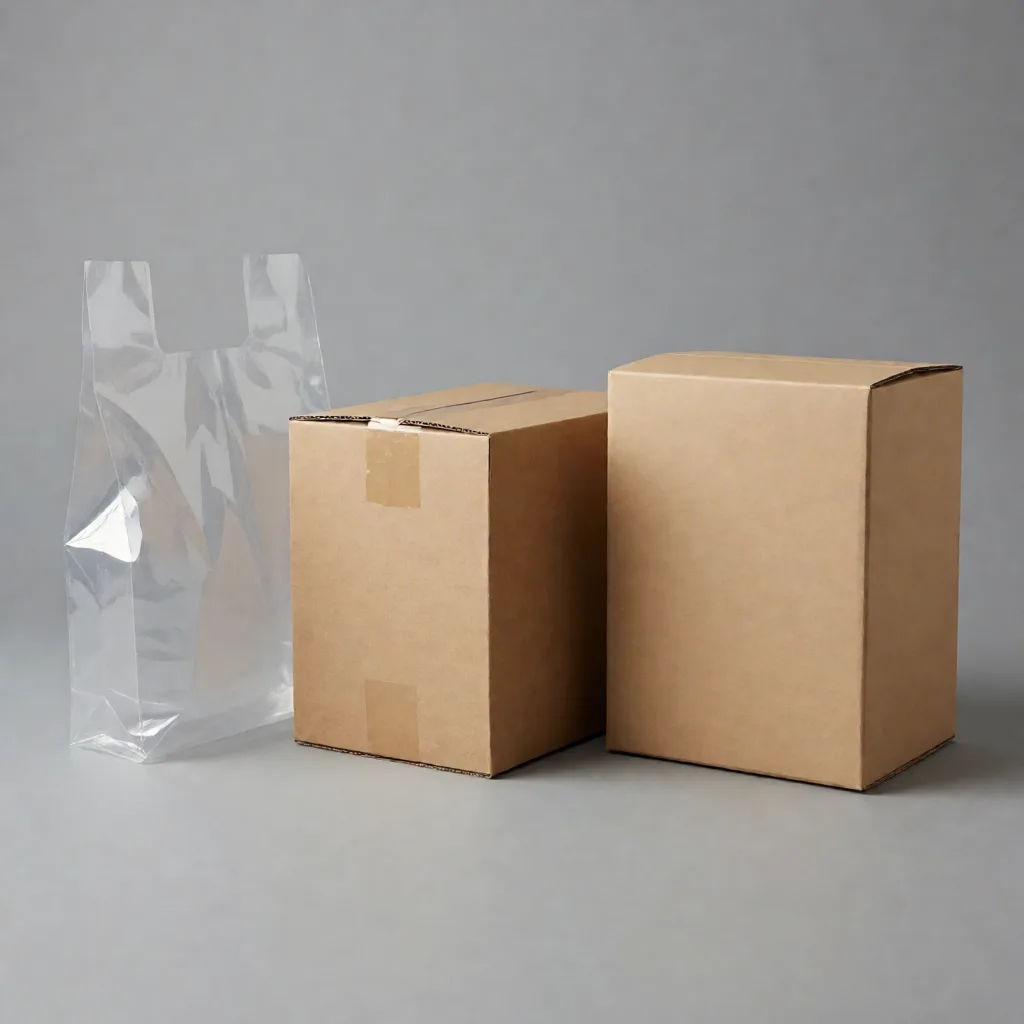
Ship the launch run in plain cartons and a poly bag. Confirm the product sells, confirm the channel, and confirm the size the pack needs to be. Then commission the printed pack for the second order, when the volume justifies the setup and the artwork is based on real information rather than assumption.
Two things stay constant across both orders: the product specification and the pack dimensions. Keep them written down, because changing the printed pack later means a new die, and changing the product means the pack no longer fits.
The same logic applies to the cushion itself. The MOQ and pricing guide makes the same argument for the product: launch with the fewest minimums attached, then add the premium options once the volume is real.
Frequently Asked Questions
- Does packaging need to be ordered with the product?
- No, and often it should not be. Plain packaging can be ordered with the launch run, and printed packaging later once the volume and artwork are settled.
- What is the minimum for a printed carton?
- It depends on the print method. Digital printing has almost no setup and suits short runs; plate-based methods have a setup that has to be spread over a larger run to be economical.
- Can I use the same carton for every channel?
- Usually not. A pack that survives shipping is not automatically one that meets a retailer's shelf requirements, and a shelf-ready pack is often more expensive than a pure shipping carton.
- Do I need a barcode on the product or the pack?
- On the pack, in a scannable position, and to the size and contrast the retailer or platform requires. It is part of the artwork and is fixed for the run.
- Is a carry sleeve worth the extra setup?
- Only if it does a job for the customer. A sleeve that doubles as a travel bag earns its setup; one that is only decorative usually does not, until the price point supports it.
- How much of the packaging decision belongs to the manufacturer?
- The format and the artwork are yours; the minimum, the print method and the die are theirs. Agreeing the two together at the start is what prevents a pack that cannot be produced at your volume.
Where to Take This Next
Settle the channel, then the format, then the print method, then the artwork. If the product itself is still open, the product range shows what is already built as a platform, which is usually the cheapest starting point for a first order. When you are ready to specify the pack, send the channel and the volume and we will tell you which format it supports, or see the customisation process for how packaging is signed off alongside the product.