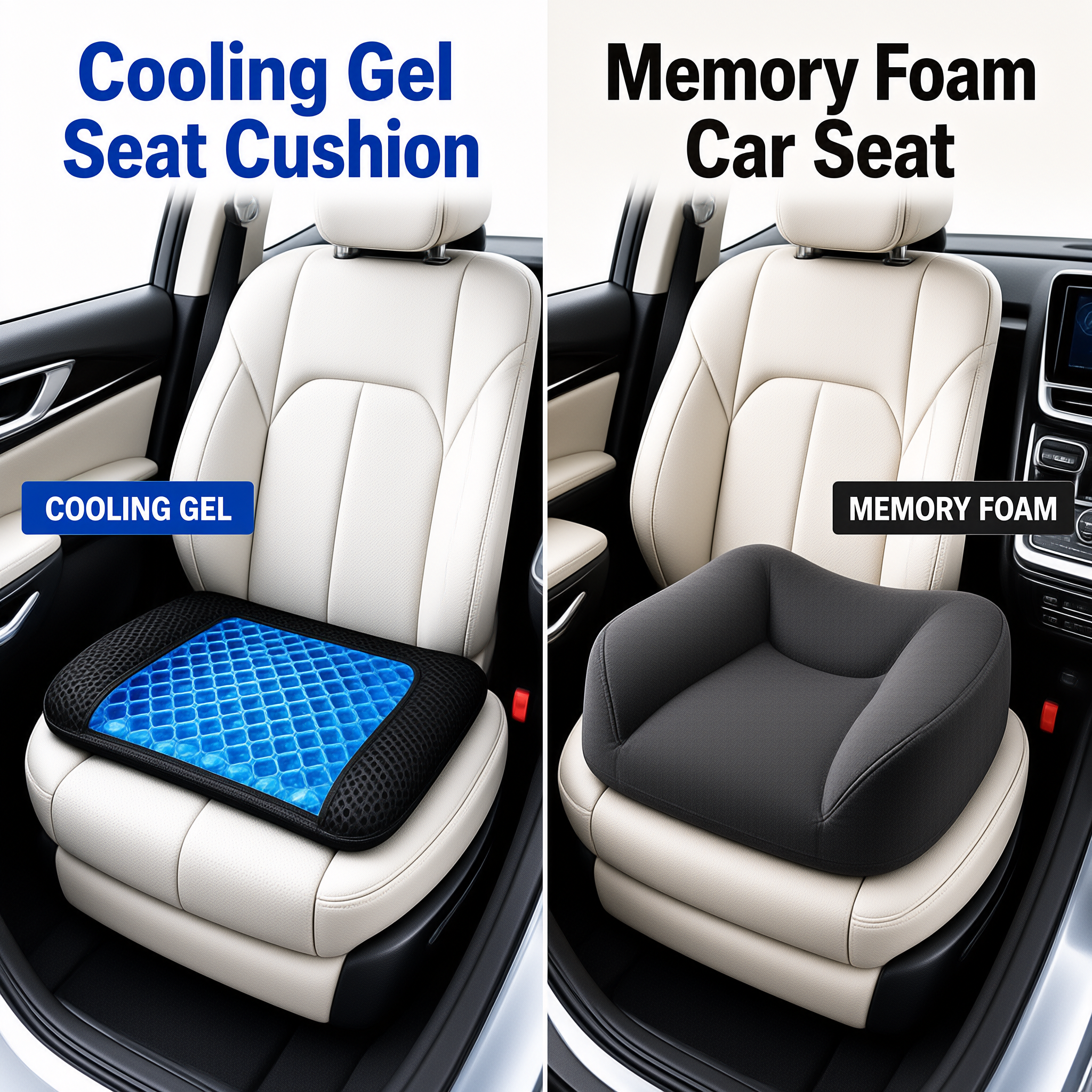
Learn how to plan custom car lumbar support development, from fit and materials to branding, testing, MOQ, and production control.
To customize car lumbar support for a brand, define the target driver and vehicle, select a support architecture, establish dimensions and firmness, choose compatible materials and attachment parts, approve branding and packaging, validate prototypes under realistic driving conditions, and only then confirm MOQ, cost, and production timing. The product brief should be treated as a controlled specification rather than a collection of aesthetic preferences.
A good custom car lumbar support brief starts with the driver and seat, not the logo or color.
Key Takeaways
The right cushion starts with seat fit and driver range, not surface styling.
Universal designs lower variant risk, but contoured designs usually fit better.
Plan for at least two sample stages: one functional sample and one approval sample.
Branding should stay out of pressure zones to avoid fit and wear problems.
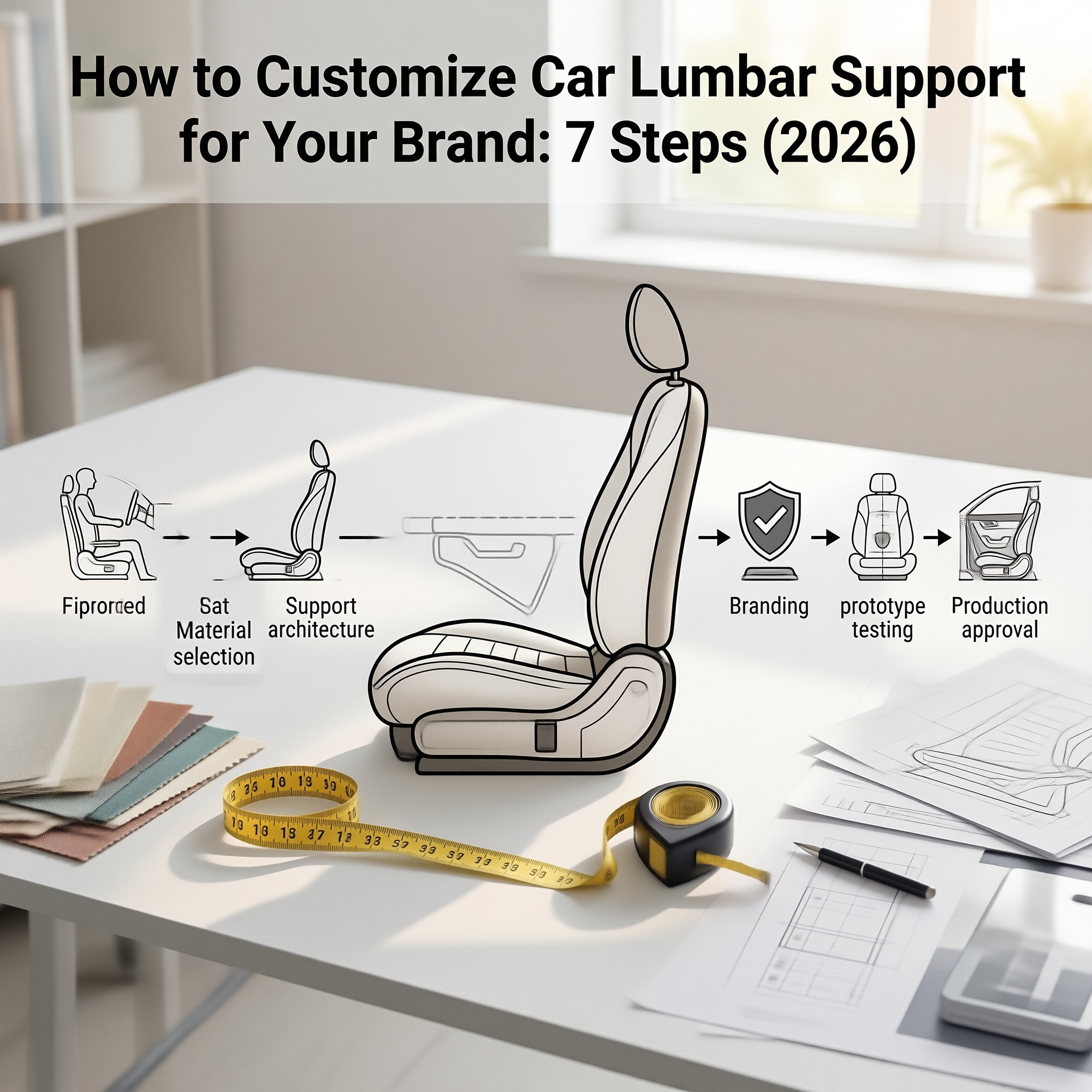
Start with the Driver Profile Your Brand Intends to Serve
Custom car lumbar support starts with a defined driver profile, vehicle seat type, and comfort goal. Without those three inputs, the design brief turns into guesswork.
Driver height, torso length, daily driving time, and seat back shape set the support target. A commuter who drives 90 minutes daily needs a different profile than a ride-share driver who enters and exits the car dozens of times.
In a 2026 project-planning model, a brand targeting daily commuters used one seat platform and a 5th to 95th percentile driver range before sampling. That kept the first concept sample aligned with the actual user group instead of a generic comfort idea.
Choose the Support Architecture Before Designing the Surface
Foam-Only and Fiber-Fill Options
Foam-only designs are best for stable support and repeatable production. Fiber-fill options are better when the brand wants a softer hand feel and lower setup complexity.
The choice between foam and fill changes how the cushion holds shape under load. Foam resists collapse more predictably, while fiber-fill spreads pressure less uniformly and can shift over time.
In our sampling notes, foam-only builds usually need fewer revision rounds than loose-fill builds. That pattern matters when a launch calendar allows only one or two prototype passes.
Contoured or Molded Support
Contoured support is better for seat-specific fit, while molded support wins on repeatability and shape retention. This is the main tradeoff inside car lumbar support types.
A contoured shape follows the vehicle seat back more closely, so it feels more integrated. A molded core keeps its geometry better under repeated compression and shipping stress.
The universal vs contoured lumbar cushion decision often comes down to return risk. If one cushion must fit many seats, universal is safer; if one vehicle platform drives the program, contoured usually performs better.
Strapped, Strapless, and Integrated Systems
Strapped systems are best for broad compatibility. Strapless and integrated systems win when the seat shape already provides strong retention.
Straps add adjustment range, but they also add failure points and visible hardware. Integrated systems look cleaner, yet they usually need tighter seat fit and more precise geometry.
A practical rule is simple: choose straps if the seat fleet is mixed, and choose integration if one platform dominates. That tradeoff keeps the design aligned with seat fit instead of style alone.
Universal fit reduces variant risk, but contoured support usually wins on seat stability.
Set Dimensions, Curvature, and Firmness from Vehicle Seats
The right car lumbar cushion dimensions come from the seat back, not from a generic template. Thickness, width, and curvature must match the target seat and driver range.
Too much thickness pushes the pelvis forward and changes posture. Too little curvature leaves the cushion floating away from the lower back, which reduces support and retention.
A realistic brand case is a commuter-cushion program where the first sample used excessive central thickness and failed vehicle trials. The fix was to replace the insert, revise the cover pattern, and issue a second functional sample before branding approval.
Select Foam, Frames, Covers, and Attachment Parts
Core Support Materials
Memory foam is better for pressure conformity, while higher-resilience foam wins on rebound and shape recovery. A frame or insert becomes useful when the product needs stronger edge control.
Car seat lumbar support materials change the way the cushion ages. Softer foams feel premium at first, but firmer cores usually hold their shape longer under daily compression.
In a 2026 sourcing review, firmer cores reduced visible collapse during repeated loading, while softer inserts produced better first-touch comfort. The tradeoff is comfort now versus shape retention later.
Cover and Surface Materials
A breathable cover is better for daily use, while a smoother cover wins on premium appearance and easier branding. The memory foam lumbar support cover should also match the cleaning method.
Cover texture affects heat buildup, abrasion, and logo placement. Dense knit or mesh fabrics breathe better, but they may show stitching or embroidery more clearly than smoother textiles.
For a daily-commuter product, a breathable cover usually outperforms a purely decorative surface. If the brand sells on appearance first, then the cover must be tested for wear and color stability.
Attachment and Edge Components
Straps, buckles, and edge binding control how the cushion stays in place. The best attachment part is the one that survives repeated seat movement without twisting.
Attachment hardware affects both comfort and durability. If the strap pulls across a sharp edge, the load concentrates and the cushion shifts during braking or cornering.
According to ISO quality and testing standards, the exact test route depends on the material and market. That is why attachment and cover choices should be locked only after the target standard list is confirmed.
The cover is not just decoration; it changes heat, wear, and logo performance.
Apply Logos, Colors, and Packaging Without Compromising Fit
Branded car lumbar cushion design should follow the cushion geometry, not override it. Put the logo where compression is low and the surface stays stable.
Embroidery is best when the panel is flat enough to hold stitches cleanly. Heat-transfer marks are better when the surface curves too much for dense thread work.
Our specification process should require the supplier to mark three regions on the drawing before sampling: the primary lumbar-contact zone, the highest-flex zone, and the seam or attachment zone. This prevents the logo, piping, or molded feature from being placed where repeated compression is most severe.
Build a Prototype and Validation Plan Around Failure Modes
Lumbar support prototype testing should start with fit, retention, and compression behavior. If those fail, appearance testing does not matter yet.
Most failures come from three causes: the cushion is too tall, the attachment system slips, or the cover distorts after loading. Each one needs a different fix, so the test plan must separate them.
The validation plan should test at least three functional units from the final pre-production lot and record firmness, dimensions, attachment security, cover condition, odor, and visible deformation after repeated loading. Any numerical pass threshold should be agreed with the supplier and written into the purchase specification rather than introduced after testing.
Align MOQ, Cost, Lead Time, and Supplier Controls
Custom lumbar support MOQ should be set after the structure, branding method, and packaging are fixed. Changing those items later usually raises cost and adds weeks.
Choose a lower MOQ if you are testing a new channel or a narrow vehicle fit. Choose a higher MOQ if the design is stable and the unit cost must drop through setup amortization.
Final approval should not be based on visual inspection alone; the production sample must be checked against signed dimensions, materials, color references, logo placement, attachment performance, and packaging configuration. That control step protects the launch from late surprises.
Check These Common Questions Before Production Approval
Before approval, confirm that the seat fit, support height, logo placement, and sample history all match the signed specification. The most common miss is approving a cushion that looks right but sits wrong.
That mistake usually comes from treating the sample as a visual mockup instead of a production control point. If the first approval sample differs from the concept in thickness, cover tension, or strap length, the launch should pause.
The safest approval path is concept sample, functional sample, then production approval sample. That sequence keeps custom car lumbar support projects aligned with fit, branding, and schedule before mass production starts.
Frequently Asked Questions
- What information should a brand send before requesting a quote?
- Send the target vehicle type, driver range, cushion size, support level, material preference, logo method, color standard, packaging needs, quantity, and delivery date.
- Should the design be universal or vehicle-specific?
- Choose universal if you need broader fit and lower variant risk. Choose vehicle-specific if seat geometry is known and comfort consistency matters more.
- What causes most uncomfortable cushions?
- Excess thickness, wrong curvature, or poor positioning usually cause discomfort. The cushion should support the lower back without forcing the driver forward.
- Can branding be added after prototype approval?
- It can, but branding should be frozen before the final pre-production sample. Late logo or packaging changes often affect fit, cost, and lead time.
- How many prototype rounds should a buyer plan for?
- Plan for at least one functional prototype and one final approval sample. Complex fit or branding programs often need a third round.
- Which documents should a buyer request before approval?
- Request material declarations, test reports, inspection criteria, packaging specs, traceability records, and the signed production sample reference.
The best custom car lumbar support programs treat fit, materials, branding, and supplier control as one system. If you keep the vehicle seat, the driver profile, and the approval sample aligned, the launch is far less likely to miss on comfort or cost.